Dog owners in the UK cherish their furry friends as family members and regularly accompany them on car journeys. However, travelling with an unrestrained dog is not just dangerous. It is also illegal and can invalidate your car insurance in the event of an accident. We’ll leave no stone unturned discussing the legal requirements for restraining dogs in vehicles in the UK, and explain how dog seat belts and extenders can keep your canine companion safe, secure, and road-legal on every journey.
What Does UK Law Say About Restraining Dogs in Vehicles?
UK law is clear that an unrestrained dog in a vehicle is a legal liability, and not just a safety concern. Rule 57 of the Highway Code states that dogs and other animals must be suitably restrained so they cannot distract the driver or injure themselves or passengers in the event of a sudden stop. Failure to comply can result in serious financial and legal consequences.
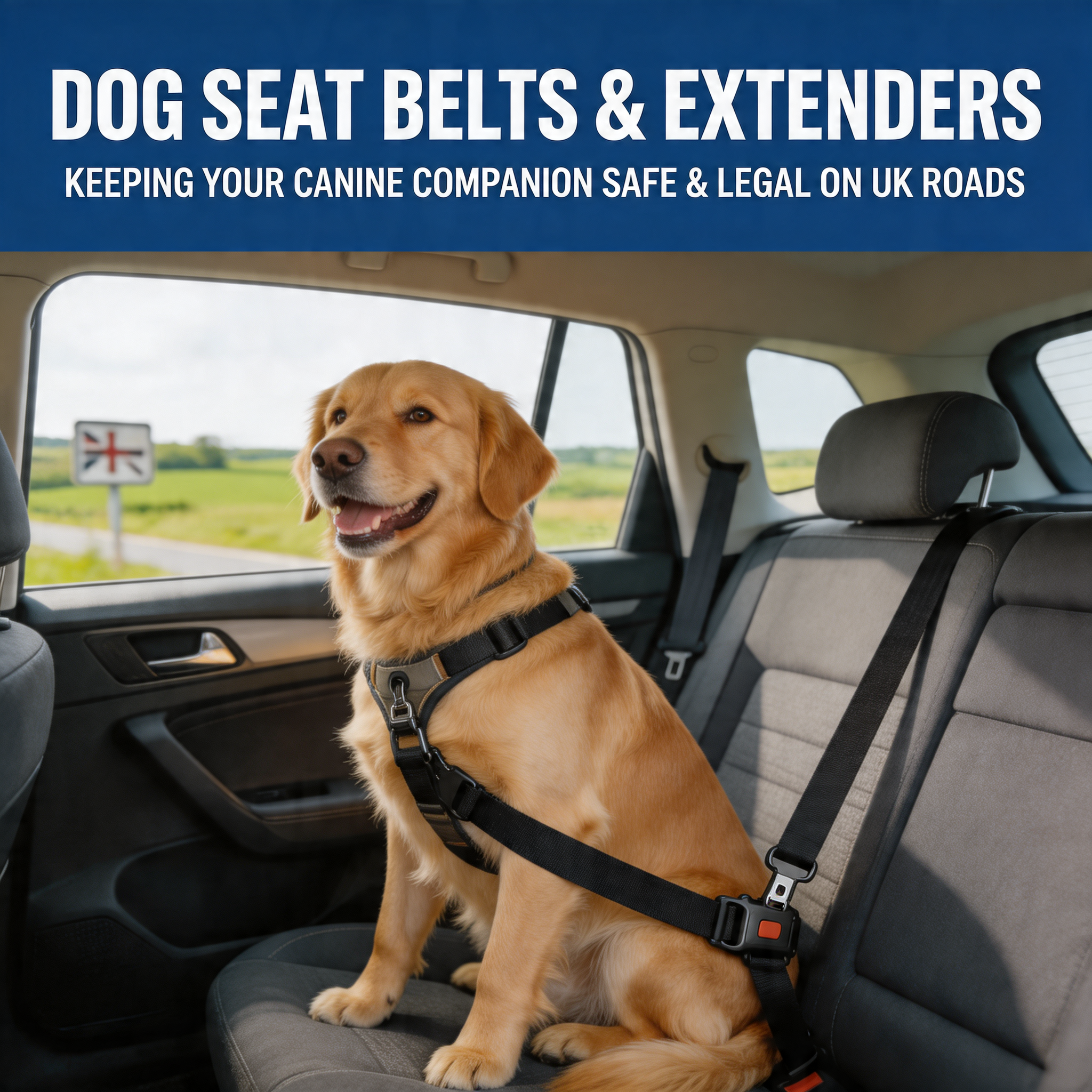
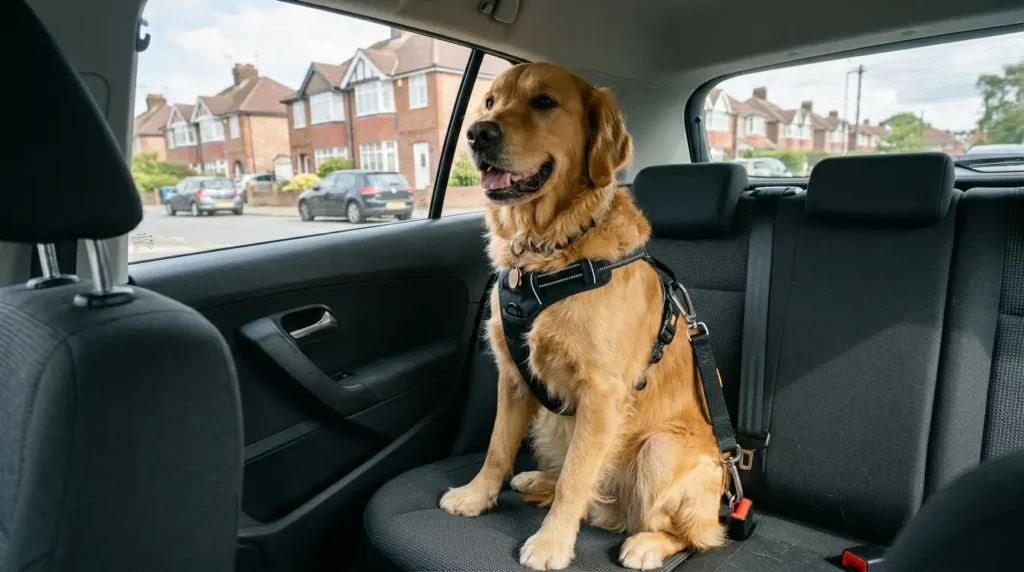
Rule 57 of the Highway Code requires dogs to be suitably restrained in vehicles, and a crash-tested harness clipped into the seat belt is one of the most effective ways to comply.
While no specific law explicitly mandates a seat belt for dogs, the interpretation of Rule 57 means that if your unrestrained dog causes a distraction or contributes to an accident, you could face:
Fines: Up to £1,000 for driving without due care and attention and significantly more if the distraction leads to a serious collision.
Penalty Points: Added to your driving licence, which can affect your insurance premiums and, in serious cases, result in a driving ban.
Invalidated Insurance: If your dog was not properly restrained at the time of an accident, your insurer can refuse to pay out, leaving you personally liable for all costs, including third-party claims, vehicle repair, and medical expenses
Those make restraining your dog not just about their safety, but also a legal requirement, a financial necessity, and a responsibility to every other road user.
Why Are Dog Seat Belts and Harnesses Essential for Car Travel?
A dog seat belt used with a crash-tested harness is one of the most effective restraint methods available, and the harness quality matters as much as the belt itself. A harness that has not been crash-tested may hold a dog under normal driving conditions but fail under collision forces, which can be fatal for both the dog and other occupants.
Prevent Distraction: A restrained dog cannot move freely around the cabin, jump onto the driver, or interfere with the steering wheel, gear stick, or pedals, all of which are leading causes of distraction-related accidents involving dogs in vehicles.
Protect in a Collision: An unrestrained 25kg dog travelling at 30mph becomes a 750kg projectile in a sudden stop, enough force to cause fatal injuries to front seat occupants. A properly fitted, crash-tested harness and seat belt absorbs impact forces and keeps the dog contained.
Maintain Control: Keeps the dog in a fixed area of the vehicle, preventing escape through open windows or doors at stops, and stopping the dog from reaching other passengers or interfering with the driver during the journey.
How Can a Dog Seat Belt Extender Help?
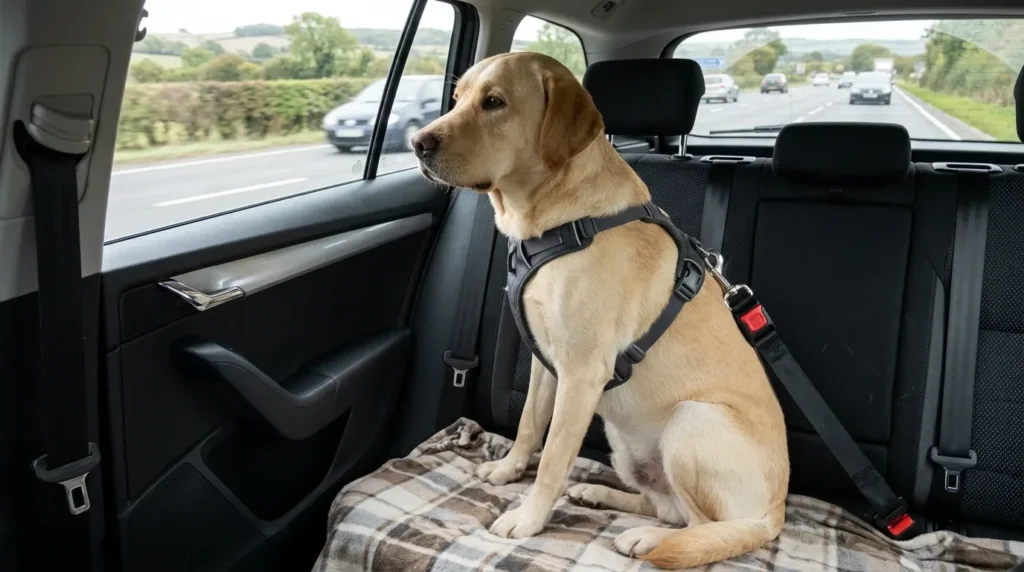
A dog seat belt extender is particularly useful for larger breeds, dogs with broader harness attachment points, or vehicles where the standard buckle position creates an awkward or uncomfortable fit.
A seat belt extender gives larger dogs the extra length needed for a comfortable, natural sitting position without creating slack that compromises restraint in a collision.
Increased Comfort: For larger dogs, an extender provides a small amount of additional movement within their designated area to reduce strain on the harness attachment point during longer journeys without creating enough slack to compromise restraint in a collision.
Better Buckle Access: In vehicles with recessed or deeply positioned buckles, an extender brings the connection point closer and higher, which makes it significantly easier to secure and release the harness quickly, particularly useful when travelling with children or multiple passengers simultaneously.
Optimised Positioning: An extender can correct an awkward harness angle caused by a low or off-centre buckle position to ensure the restraint pulls in the correct direction and does not create uncomfortable pressure on the dog’s chest or shoulders during the journey.
When choosing a dog seat belt extender, confirm it is made from high-strength materials, rated for the weight of your dog, and clicks securely into your car’s existing seat belt buckle without play or wobble.
How Do You Choose the Right Restraint System for Your Dog?
The restraint system is only as safe as its weakest component. A premium harness attached to a poorly rated seat belt clip provides far less protection than a fully tested, integrated system.
Ease of Use: A restraint that is difficult or time-consuming to fit makes it less likely to be used consistently. Choose a system with a simple, one-handed buckle mechanism that can be secured quickly and released easily in an emergency.
Crash-Tested Harness: Prioritise harnesses independently crash-tested by organisations such as the Centre for Pet Safety or equivalent, as a harness rated only for normal driving conditions can fail completely under collision forces, becoming a projectile rather than a restraint.
Comfort and Fit: The harness must fit snugly without restricting breathing or causing chafing. Always measure your dog’s chest girth and neck circumference against the manufacturer’s sizing guide before purchasing, as an ill-fitting harness is both uncomfortable and unsafe.
Vehicle Compatibility: Most dog seat belt clips use a standard buckle tongue, but buckle widths vary between car manufacturers. Always verify the clip is compatible with your specific vehicle’s buckle before purchasing, particularly for newer or premium models with proprietary buckle designs.
Every Journey Is Safer When Your Dog Is Properly Restrained
Restraining your dog in a vehicle is a legal requirement and a crucial aspect of responsible pet ownership in the UK. Dog seat belts, often enhanced with a suitable extender, provide a safe and effective way to protect your canine companion and every other occupant in your car. By choosing a high-quality, crash-tested system, you can ensure peace of mind knowing your dog is secure and you are fully compliant with the law on every journey.
Looking for a compatible seat belt extender for your dog’s harness? Browse our full range of UK-tested, certified seat belt extenders, built from high-strength materials, compatible with most UK vehicle buckles, and delivered free via Royal Mail.
Mr Seatbelt
I'm a huge fan of travelling, and doing so safely. I write articles about seatbelts to help educate our customers. If you have any questions about seat belts, just ask!