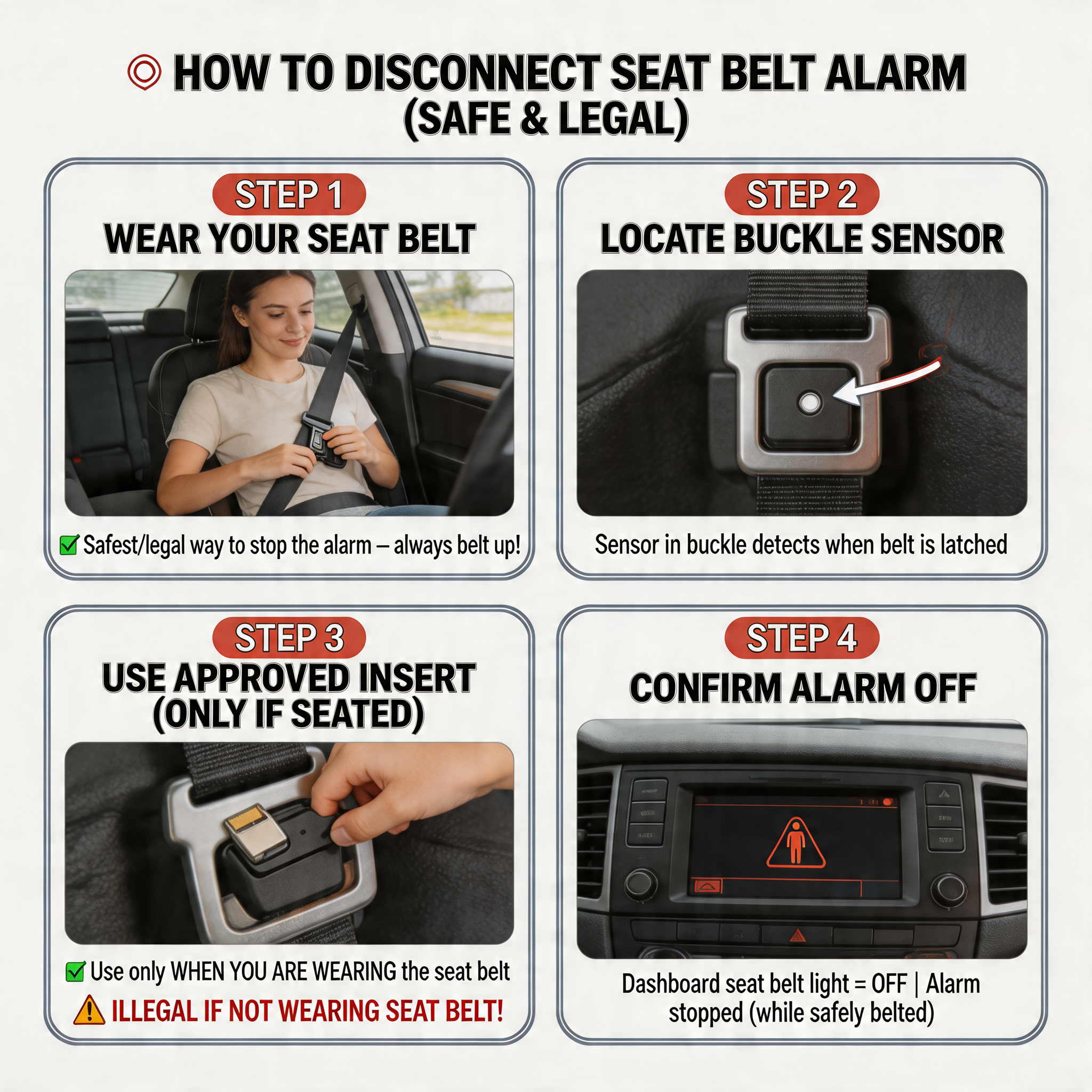
Modern cars are equipped with numerous safety features, and the seat belt alarm is one of them, designed to remind occupants to buckle up on every journey. While crucial for safety, these alarms can sometimes become a genuine nuisance, triggering when a passenger seat is empty but has a bag on it, when moving the car a short distance on private property, or when a medical condition makes wearing a standard seat belt temporarily impractical. Before attempting to disconnect or disable a seat belt alarm, it is essential to understand the legal implications and safety risks involved. Tampering with vehicle safety systems in the UK is not a decision to take lightly. Let’s explore the common reasons for wanting to disconnect a seat belt alarm and, more importantly, the legal and safety considerations every UK driver needs to know first.
What Is a Seat Belt Alarm and How Does It Work?
A seat belt alarm is a passive safety reminder built into your vehicle to encourage consistent belt use. It works by combining two sensors, one in the buckle and one in the seat, to detect when a passenger is present but unbelted.
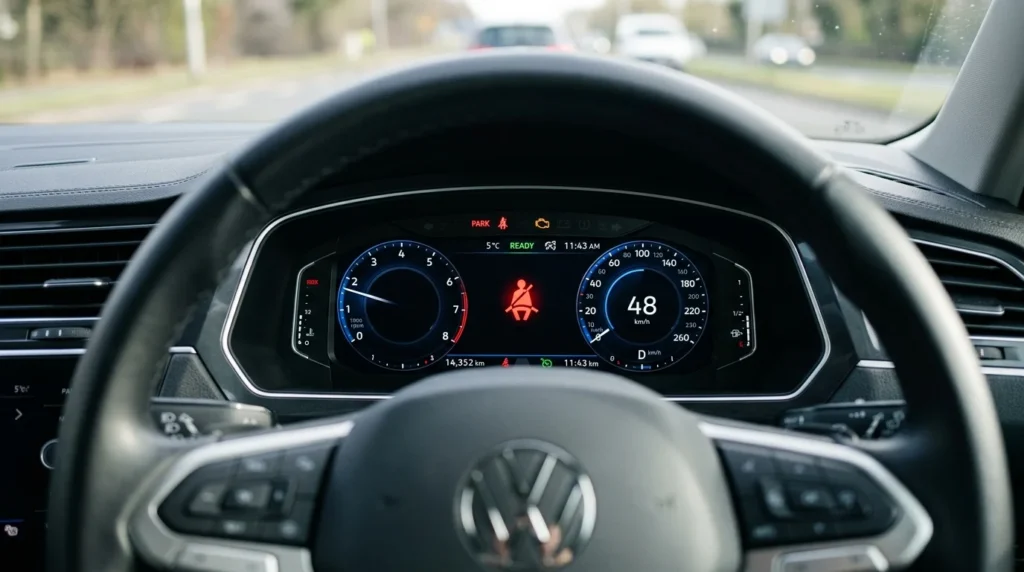
The seat belt warning light and audible chime are triggered when the vehicle detects an occupant in a seat with the belt unfastened. It’s a passive safety reminder designed to encourage consistent belt use.
Seat buckle sensor: Detects whether the seat belt tongue has been inserted and latched securely into the buckle receptacle.
Weight sensor: Embedded in the seat cushion itself, it detects the presence of an occupant above a certain weight threshold, triggering the alarm circuit when combined with an unlatched buckle.
Alarm trigger: When both conditions are met, an occupant is detected and the belt unfastened, the system activates an audible chime and a dashboard warning light, typically continuing at increasing intervals until the belt is fastened.
Why Would Someone Want to Disconnect a Seat Belt Alarm?
There are a handful of legitimate situations where a seat belt alarm becomes more of a nuisance than a safety prompt. Understanding these reasons helps distinguish genuine frustration from an unsafe habit.
False alarms: Heavy bags, pet carriers, or shopping placed on the passenger seat can trigger the weight sensor, setting off the alarm despite no occupant being present, which is a common and genuinely irritating experience for everyday drivers.
Short journeys on private property: Moving a vehicle across a driveway, farm, or private land sits outside the legal requirement to wear a seat belt, making the persistent chime feel disproportionate in that context.
Mobility issues: For elderly drivers or those with limited dexterity, the time it takes to fasten a belt can mean the alarm triggers before they are ready. In these cases, a seat belt extender can raise the buckle to a more accessible position, making fastening quicker and reducing alarm frustration altogether.
What Are the Legal Implications of Disconnecting a Seat Belt Alarm in the UK?
Disconnecting a seat belt alarm in the UK is not a decision to take lightly. Beyond the safety risks, there are real legal and financial consequences that could far outweigh the inconvenience of a persistent chime.
Increased risk of serious injury: The alarm exists because unbelted occupants are significantly more likely to suffer fatal or serious injuries in a collision. Removing the reminder doesn’t remove the risk but simply eliminates the prompt that could save a life. UK law requires all occupants to wear a seat belt where one is fitted, and that obligation remains regardless of whether an alarm is active.
MOT failure: While the alarm itself is not a standalone MOT test item, any modification that affects the integrity or functionality of the seat belt system as a whole can be flagged as a defect. If a tester determines that a deliberate modification compromises the vehicle’s safety features, it can result in a fail, meaning the vehicle cannot legally be driven until the issue is resolved.
Insurance invalidation: If an accident occurs and an insurer discovers that a safety feature has been intentionally disabled, your policy could be voided entirely. This leaves you personally liable for repair costs, medical expenses, and third-party claims, which could potentially run into tens of thousands of pounds.
What Are the Safety Risks of Disabling a Seat Belt Alarm?
The legal consequences of disabling a seat belt alarm are serious, but the safety risks are arguably greater. Removing an audible reminder has a direct and measurable impact on whether occupants buckle up consistently.
Increased risk of fatal injury: Research consistently shows that unbelted occupants are significantly more likely to be killed or seriously injured in a collision. Without the alarm as a prompt, the likelihood of forgetting to fasten the belt, particularly on short, familiar journeys, increases substantially. A seat belt is the single most effective safety device in any vehicle, and anything that reduces the chance of wearing one carries real consequences.
Passenger safety: When a passenger seat alarm is disabled, a passenger may travel unrestrained without either party realising it. This is particularly concerning for rear seat passengers, who are statistically less likely to buckle up unprompted and whose unrestrained movement in a crash poses a serious risk not only to themselves but to front seat occupants as well.
What Methods Are Used to Disable Seat Belt Alarms and Why Should You Avoid Them?
Several methods circulate online for silencing seat belt alarms, but every one of them carries risks that significantly outweigh the convenience they offer. We strongly advise against all of them.
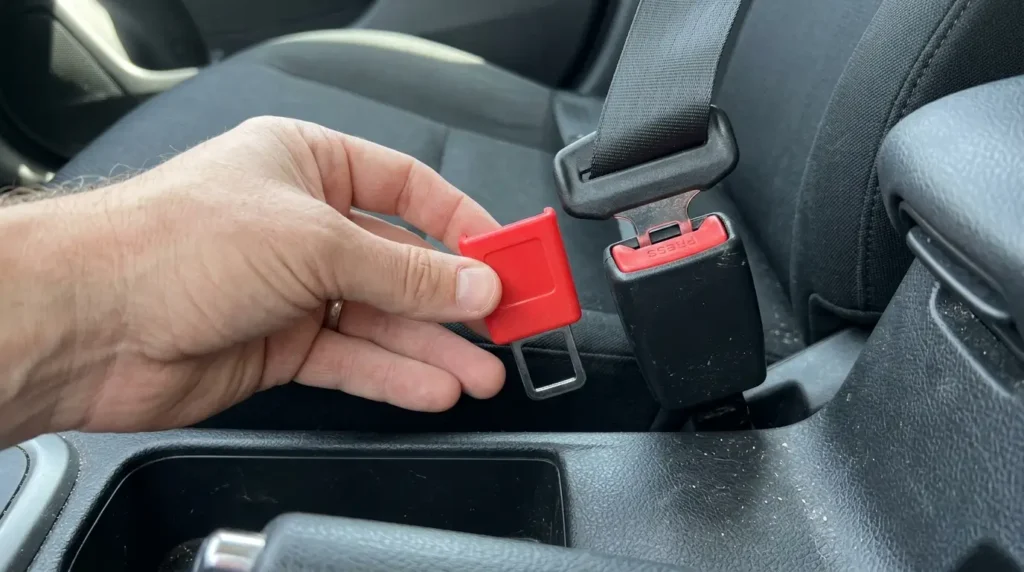
Dummy buckle clips silence the alarm by tricking the sensor, but leave the occupant completely unrestrained. A certified seat belt extender is the only safe and legal alternative.
Seat belt extenders misused as stoppers: Some drivers insert an extender permanently into the buckle without wearing the belt at all, using it purely to silence the alarm. This misuse not only leaves the occupant unprotected but defeats the purpose of a product specifically designed to help people wear their belt more comfortably.
Dummy buckles and alarm clips: Small plastic clips designed to sit permanently in the buckle receptacle, tricking the sensor into thinking the belt is fastened. While inexpensive and widely available, they leave occupants completely unrestrained and are, in effect, a device designed to defeat a life-saving system.
Electronic modifications: More complex interventions involve interfering with the vehicle’s wiring or onboard computer to suppress the alarm signal entirely. Beyond the safety risk, this type of modification can trigger warning lights, affect other vehicle systems, and almost certainly invalidate your manufacturer’s warranty and insurance policy.
Is There a Safe and Legal Alternative to Disabling Your Seat Belt Alarm?
If the alarm is frustrating because fastening your belt is genuinely difficult, the solution is not to silence the system, but to make buckling up easier. A certified seat belt extender addresses the root cause rather than the symptom.
Unlike dummy buckles, a genuine extender allows the belt to be worn correctly and the buckle sensor to register a proper, safe connection, meaning the alarm is silenced because the occupant is actually belted, not because the system has been tricked.
Plus-size individuals, pregnant drivers, those recovering from surgery, and elderly passengers with limited dexterity all have legitimate reasons why a standard belt length or buckle position makes fastening difficult. For all of these groups, a certified extender from a reputable UK supplier is the safe, legal, and effective solution.
Choose a Certified Seat Belt Extender Not a Shortcut That Puts Lives at Risk
While the temptation to silence a persistent seat belt alarm can be strong, the legal and safety implications of doing so are significant. Tampering with this vital safety feature can invalidate your insurance, lead to an MOT failure, and most importantly, put lives at risk. For those with genuine needs for additional seat belt length, a certified seat belt extender offers a safe and compliant alternative. This ensures comfort without ever compromising safety.
If fastening your seat belt is the real problem, solve it properly. Browse our full range of UK-tested, certified seat belt extenders designed to make buckling up easier for plus-size drivers, pregnant passengers, and those with mobility challenges, with free Royal Mail delivery on every order.
Mr Seatbelt
I'm a huge fan of travelling, and doing so safely. I write articles about seatbelts to help educate our customers. If you have any questions about seat belts, just ask!