
FREE Postage via Royal Mail | 10% OFF On Orders Over £20
If you have bought a seat belt extender for your Tesla Model Y or Model 3 and found that the seat belt tongue clips into the car’s buckle but will not lock into the extender — or that the extender clips into the car but the belt will not engage — you have the wrong type. You are not alone, and it is not your fault.
The Tesla Model Y and Model 3 rear seats use a Type B buckle system. The vast majority of seat belt extenders sold online — including most Amazon listings — are Type A. They are physically incompatible with the Tesla rear seat buckle. This is one of the most common compatibility issues we deal with, and it generates more customer returns than almost any other vehicle on our books.
This guide explains exactly what is happening, why Tesla uses a different system, and how to make sure you get the right extender first time.
The pattern is consistent across every Tesla owner who contacts us:
“I have tried the seat belt extenders and they don’t function. Neither of them work on any seat belt on my Tesla Model Y. They clip into the fixing but the belts won’t lock in the units you have provided.”
— Luke, Tesla Model Y owner
“Extender has now arrived. It does not fit the rear seat of our Tesla Model 3 and I am returning it.”
— Tesla Model 3 owner
“I have a Tesla Model Y 2022. I am looking at the 12cm extenders for the rear of my car. I was just wondering if these are compatible? I have tried buying this sort of thing before and they didn’t accept the Tesla buckle. I am a taxi driver and passengers always have difficulty getting the belt on as it’s very recessed and drives me crazy.”
— Taxi driver, Tesla Model Y 2022
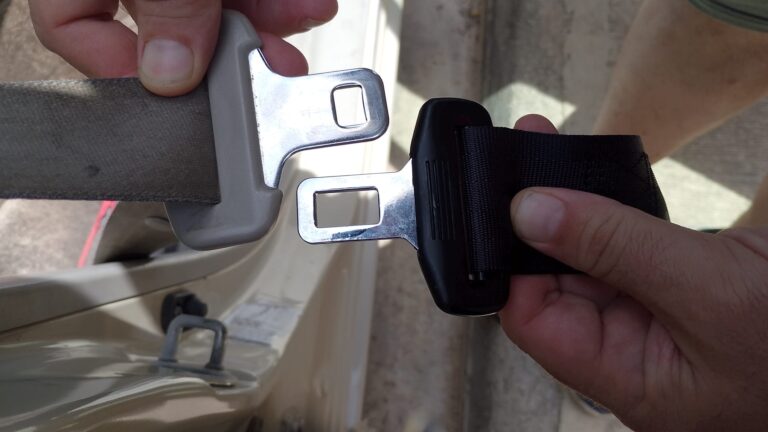
Notice the recurring phrase: “they clip into the fixing but the belts won’t lock.” This is the definitive symptom of a Type A extender being used with a Type B buckle. The extender connects to the car’s female buckle correctly — but the seat belt tongue is too wide to lock into the extender’s receiver. The mechanism cannot engage.
As one of our team noted after reviewing the pattern of returns:
“The Model 3 and Y all years rear seat does not fit the standard seat belt extender Type A. It is Type B. A lot of complaints.”
Tesla’s decision to use a Type B buckle system in the rear seats of the Model Y and Model 3 is not accidental. There are two main reasons:
1. Recessed buckle design. Tesla’s rear seat buckles are deliberately recessed into the seat cushion — they sit lower and further back than on most conventional cars. This is a design choice that gives the interior a cleaner, more minimal look, but it makes the buckle harder to reach, especially for passengers who are larger, less mobile, or sitting in the middle seat. The Type B buckle geometry is part of this recessed system.
2. Safety architecture. Tesla’s vehicles are built on a unique platform with a different floor structure to conventional cars (due to the battery pack beneath the floor). The seat belt anchor points, belt routing, and buckle geometry are all designed around this platform. The Type B rear buckle is part of Tesla’s specific safety system for this architecture.
The practical result for owners and taxi drivers is that the rear seats — which are the seats most likely to need an extender, given that passengers are often less familiar with the recessed buckle — require a Type B extender rather than the standard Type A.
| Tesla Model | Year(s) | Front Seats | Outer Rear Seats | Centre Rear Seat | Notes |
| Model Y | 2022–2026 | Type A | Type B | Type B | Rear seats are Type B — all years |
| Model Y Long Range | 2023 | Type A | Type B | Type B | Same as standard Model Y |
| Model 3 | All years | Type A | Type B | Type B | Rear seats are Type B — all years |
Important: The front seats of the Model Y and Model 3 use standard Type A buckles. If you only need an extender for the driver or front passenger seat, a Type A extender will work. It is specifically the rear seats that require Type B.
The Tesla Model Y is one of the most popular vehicles in the UK private hire and taxi industry. Its low running costs, large boot, and premium interior make it a natural choice for Uber, Bolt, and private hire operators. But the recessed rear buckles are a genuine daily frustration for drivers:
“Passengers always have difficulty getting the belt on as it’s very recessed and drives me crazy.”
For taxi drivers, this is not just a comfort issue — it is a safety and compliance issue. Passengers who struggle to buckle up may give up and ride unbelted, which is illegal and dangerous. A Type B extender in the rear seats brings the buckle up and forward, making it immediately accessible for passengers of all sizes and mobility levels.
If you are a Tesla taxi driver or private hire operator, we recommend fitting Type B extenders in both rear outer seats as standard. It will eliminate the buckle frustration entirely and ensure every passenger can belt up quickly and safely.
| Your Tesla Situation | Recommended Extender | Why |
| Model Y / Model 3 — rear seats (any year) | Type B Extender | Rear seats use Type B buckle — Type A will not work |
| Model Y / Model 3 — front seats | 23cm Rigid Type A Extender | Front seats use standard Type A |
| Taxi / private hire — rear passenger comfort | Type B Extender (both rear seats) | Recessed buckle — extender brings it forward |
| Larger rear passenger needing more belt length | Type B Adjustable Extender | More length plus correct buckle type |
The quickest way to confirm whether your Tesla seat uses Type A or Type B is the symptom test:
Symptom A — Extender connects to car but belt won’t lock in: This means the extender is Type A and the car buckle is Type B. The extender’s female receiver is too narrow for the Tesla tongue. You need a Type B extender.
Symptom B — Belt connects to extender but extender won’t connect to car: This is less common and usually means the extender’s male tongue is the wrong width for the car’s female buckle. Contact us with your model details.
Symptom C — Everything connects but feels loose or unsecured: This can indicate a size mismatch. Contact us before using the extender.
If you are ordering for the first time and want to be certain before purchasing, send us a photo of the rear seat buckle (the female part fixed to the seat) and we will confirm the type within a few hours.
Why does my Tesla Model Y seat belt extender clip in but the belt won’t lock?
This is the most common Tesla extender issue. It means you have a Type A extender, but the Tesla Model Y rear seats use a Type B buckle. The tongue of the seat belt is too wide to engage the locking mechanism in a Type A extender. You need a Type B extender for the rear seats.
Do all Tesla Model Y years have the same rear buckle type?
Yes — all years of the Model Y (2020 to present) use the Type B buckle system in the rear seats. This applies to all variants, including Standard Range, Long Range, and Performance.
Do the Tesla Model 3 rear seats also need a Type B extender?
Yes — the Model 3 rear seats use the same Type B buckle system as the Model Y. All years are affected.
What about the Tesla Model Y front seats?
The front seats of the Model Y use standard Type A buckles. A Type A extender will work in the front seats. Only the rear seats require Type B.
I’m a taxi driver with a Tesla Model Y — can I fit extenders to the rear seats?
Yes, and we strongly recommend it. Type B extenders fitted to both rear outer seats will bring the recessed buckle forward, making it immediately accessible to all passengers. This is one of the most practical upgrades a Tesla taxi driver can make.
Can I use the same extender for both the front and rear seats?
No — the front seats need Type A and the rear seats need Type B. They are not interchangeable. If you need extenders for both positions, you will need to order both types.
Is a seat belt extender legal to use in a Tesla in the UK?
Yes. Seat belt extenders are legal in the UK provided the seat belt continues to function correctly, and the extender does not prevent the belt from locking in a collision. For full details, see our guide: Are Seat Belt Extenders Legal in the UK?
Why do Amazon listings say “fits Tesla” when they don’t?
Most Amazon extender listings are Type A and describe themselves as “universal.” They will fit the Tesla front seats but not the rear seats. The listing is not technically wrong — it just does not specify the seat position or buckle type. This is why we ask for your make, model, year, and seat position before every order.
If you have already returned a Type A extender because it did not fit your Tesla rear seats, please do not give up on the idea of an extender. The problem is not that extenders do not work with Tesla — it is simply that you need the correct type. A Type B extender will fit and function correctly in the rear seats of both the Model Y and Model 3.
Contact us with your model, year, and the seat position you need the extender for, and we will make sure you receive the right product first time.
| Key Fact | Detail |
| Tesla Model Y rear seats | Type B buckle — requires Type B extender |
| Tesla Model 3 rear seats | Type B buckle — requires Type B extender |
| Tesla Model Y / 3 front seats | Type A buckle — standard Type A extender works |
| Most Amazon extenders | Type A only — will not work on Tesla rear seats |
| Symptom of wrong type | Clips in but belt won’t lock, or belt won’t click into extender |
| Best use case | Taxi/private hire rear passengers, larger passengers, limited mobility |
Related articles:
•Rigid vs Adjustable Seat Belt Extender: Which One Do You Need?
•Will a Universal Seat Belt Extender Fit My Car?
•Are Seat Belt Extenders Legal in the UK?