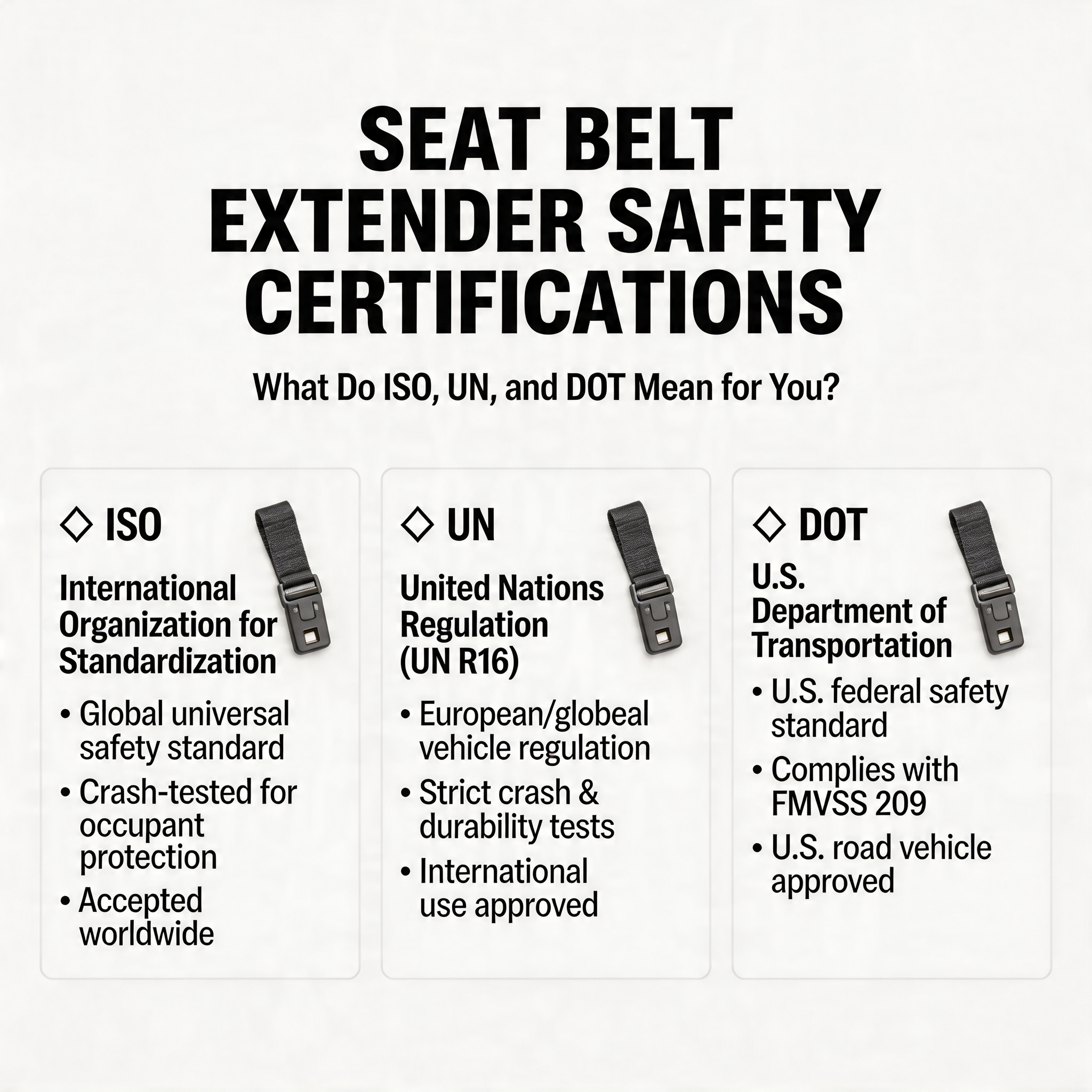
Purchasing a seat belt extender is investing in a safety device. Just like any critical automotive component, the reliability and effectiveness of a seat belt extender are paramount. Safety certifications come into play because of that. Understanding what terms like ISO, UN Regulation, and DOT registration mean can help you make an informed decision. It ensures that the extender you choose meets rigorous quality and safety standards.
Why Do Safety Certifications Matter When Buying a Seat Belt Extender?
Safety certifications confirm that a seat belt extender has been independently tested and manufactured to specific international standards. Without them, there is no way to verify that an extender will hold, release, or perform correctly in a crash. This makes certification the single most important factor when choosing one.
- Material Quality: Certification confirms that all components, including steel, plastic, and webbing, meet minimum strength and durability thresholds, ensuring the extender can withstand the forces experienced in a real collision.
- Rigorous Testing: A certified extender has been subjected to tensile strength tests, buckle release force measurements, and environmental resistance checks to verify it performs reliably under the conditions most likely to occur in a crash.
- Manufacturing Processes: Certification under standards like ISO 9001:2015 means the production facility follows a quality management system guaranteeing that every unit leaving the factory meets the same safety specification, not just the ones that were tested.
- Reliable Performance: A certified extender is engineered to integrate with your vehicle’s existing restraint system and maintain occupant protection in a crash, not just clip in and hold under normal driving conditions.
Without these certifications, the quality of a seat belt extender is uncertain, potentially compromising your safety.
What Are the Key Safety Certifications to Look for in a Seat Belt Extender?
Not all seat belt extenders carry the same safety credentials. Understanding what each certification actually tests and guarantees helps you make an informed choice. It also helps you avoid products that look legitimate but have never been independently verified for crash performance or manufacturing quality.

ISO 9001:2015 — Quality Management System
- What it is: An international standard that certifies the manufacturing processes used to produce a product, not the product itself, which confirms the factory operates a documented quality management system from design through to delivery.
- What it means for you: A manufacturer holding ISO 9001:2015 certification has a verified system in place to produce consistent and defect-free products, meaning every seat belt extender you receive is built to the same specification, not just the ones that were tested.
UN Regulation No. 16 (ECE R16) — Safety Belts and Restraint Systems
- What it is: A comprehensive European regulation covering the design, testing, and performance requirements for safety belts and restraint systems in motor vehicles, including strength, durability, and crash performance standards.
- What it means for you: An extender certified to UN Regulation No. 16 has been independently tested to meet the strictest European safety benchmarks for seat belt components, making it the most important certification to look for when buying a seat belt extender for use in a UK or European vehicle.
DOT Registration — U.S. Department of Transportation
- What it is: A self-certification process under 49 CFR Part 566 where manufacturers confirm their products comply with applicable U.S. Federal Motor Vehicle Safety Standards, demonstrating awareness of and adherence to one of the world’s most rigorous automotive safety frameworks.
- What it means for you: Although primarily a U.S. standard, a manufacturer with DOT registration signals a commitment to meeting internationally high safety benchmarks, indicating that their products are built to a globally recognised standard of quality, even when sold in the UK.
Why Should You Always Choose a Certified Seat Belt Extender?
A certified seat belt extender is a better product and a verifiable one. Certifications remove the guesswork by confirming that an independent body has tested and approved the extender for crash performance, material strength, and manufacturing consistency. For a safety device, that verification is non-negotiable.
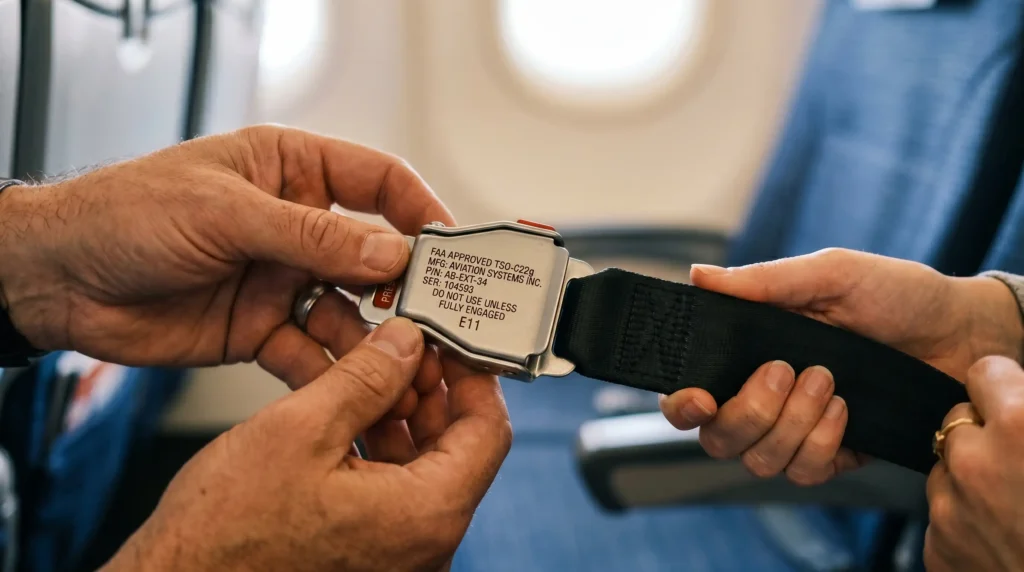
- Enhanced Safety: A certified extender has been tested to perform correctly in a collision to give you documented assurance that it will hold, restrain, and release as intended when it matters most, rather than relying on the manufacturer’s word alone.
- Reliability and Durability: Certification requires the use of materials that meet minimum strength and environmental resistance thresholds, meaning a certified extender is built to withstand regular use, temperature changes, and wear without compromising its structural integrity.
- Peace of Mind: Knowing your seat belt extender meets internationally recognised safety standards means every journey starts with confidence and not uncertainty about whether the device clipped to your seat belt will actually protect you in a crash.
- Legal Compliance: Using a certified extender helps ensure you remain compliant with UK road safety regulations, particularly important if you are ever involved in an incident where the performance of your seat belt system comes under scrutiny.
Get a Certified Seat Belt Extender That You Can Trust With Your Safety
Seat belt extenders are vital safety components, and their quality should never be overlooked. Safety certifications like ISO 9001:2015, UN Regulation No. 16 (ECE R16), and DOT registration are clear indicators of a manufacturer’s commitment to excellence and your safety.
Ready to buy with confidence? Now that you know that on the matter of safety, a certified device is the only option, browse our full range of UK-tested, certified seat belt extenders. They are built to ISO 9001:2015 and UN Regulation No. 16 standards, with free Royal Mail delivery on every order.