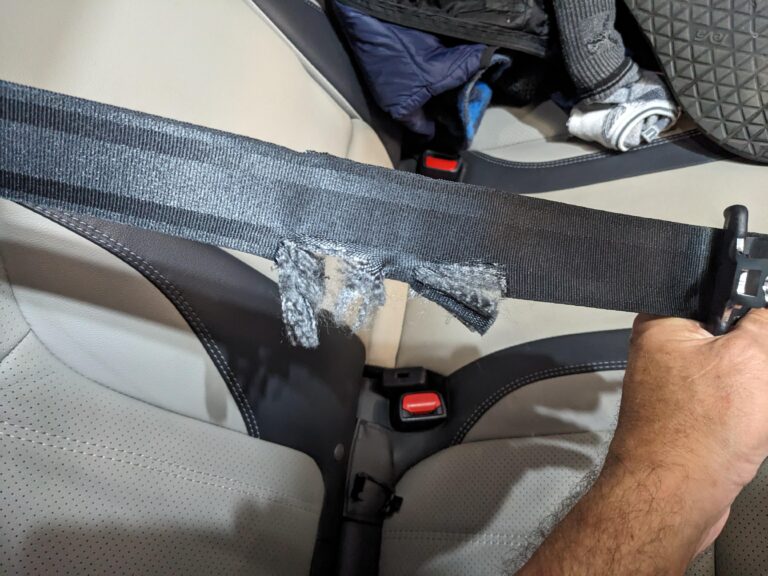
The materials used in constructing safety equipment are very crucial because lives are on the line. This also applies to the seat belt extenders due to their critical role in occupant restraint. Even though they appear simple, a high-quality seat belt extender is a sophisticated safety device built from specific materials chosen for their strength, durability, and reliability. This guide delves into the key materials used and explains why their quality directly impacts your safety.
What Are the Core Components of a Seat Belt Extender?
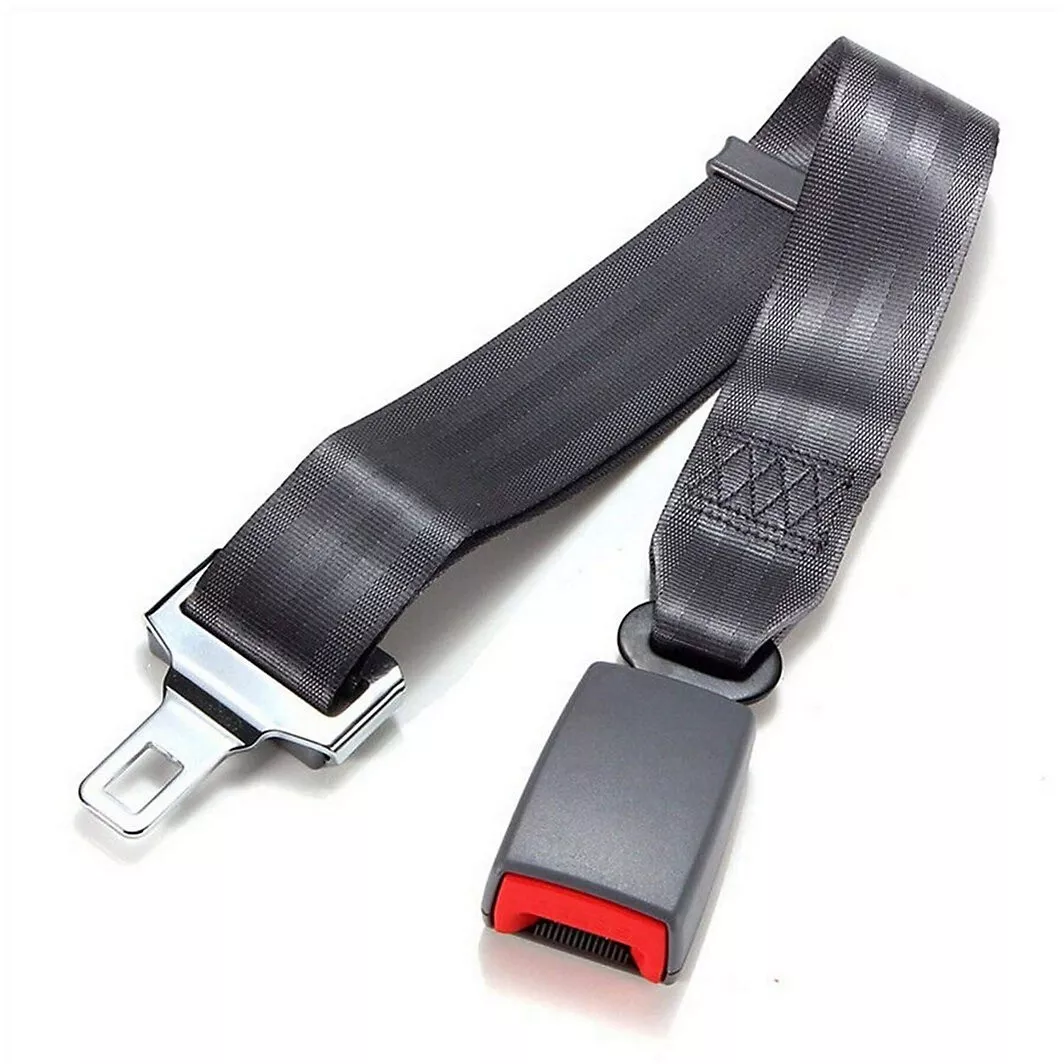
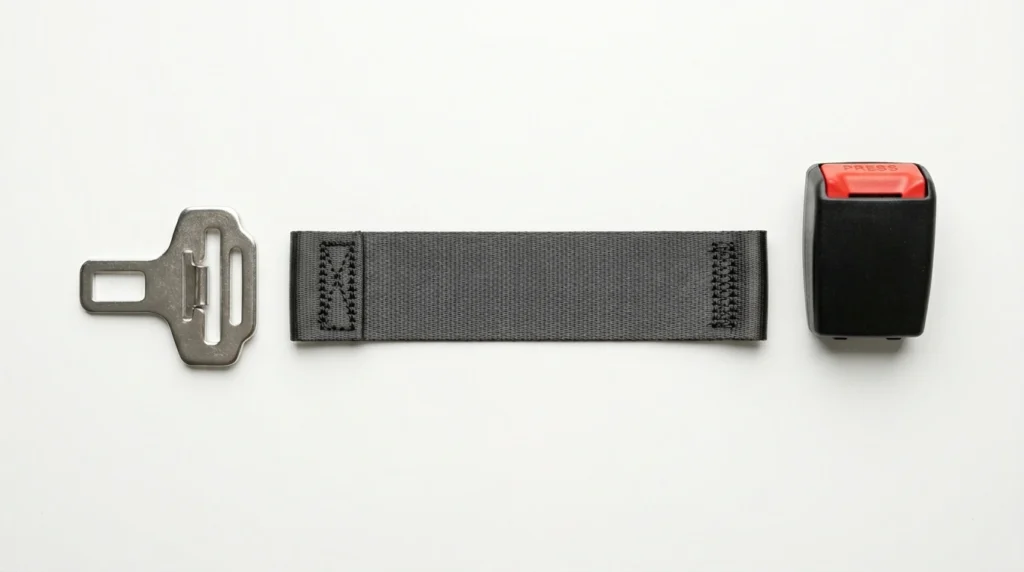
A seat belt extender has three main components. Each relies on specific materials to perform its function safely and effectively. Understanding what each part does helps you evaluate whether a product is built to the standard a safety device demands.
Every component of a quality seat belt extender is chosen for a specific reason. High-strength steel that won’t deform, durable buckle housing that won’t crack, and high-tenacity polyester webbing that won’t stretch or fray under crash forces.
The Metal Tongue (Male End): The part that clicks into your car’s original seat belt buckle and is manufactured from high-strength steel to withstand the tensile forces experienced in a collision without deforming or releasing unexpectedly.
The Buckle Receptacle (Female End): The part where your car’s original seat belt tongue clicks in, which is engineered to the same tolerances as a factory-fitted buckle, ensuring a secure, audible click and reliable release under normal and emergency conditions.
The Webbing (for Flexible Extenders): The fabric strap connecting the metal tongue and buckle receptacle in flexible models is woven from high-tenacity polyester fibres chosen for their tensile strength, abrasion resistance, and ability to distribute load evenly across the occupant’s body in a crash.
What Materials Are Used in a High-Quality Seat Belt Extender and Why Do They Matter?
The materials in a seat belt extender determine whether it will hold, flex, and release correctly under real crash conditions. Every component, from the steel tongue to the stitching, is chosen for a specific performance reason. Substituting any of them with inferior alternatives can compromise the entire restraint system.
1. High-Strength Steel (Metal Components)
Where used: Metal tongue, buckle mechanism, internal springs, and pins.
Why it matters: Heat-treated high-strength steel resists deformation and maintains structural integrity under the immense forces experienced in a collision to ensure the extender will not bend, break, or release unexpectedly under stress. Inferior metals corrode over time, weaken with repeated use, or fail catastrophically on impact.
2. ABS Plastic or High-Grade Nylon (Buckle Housing)
Where used: The outer casing of the buckle receptacle.
Why it matters: ABS plastic and high-grade nylon protect the internal steel mechanism from physical damage, temperature fluctuations, and everyday wear to ensure smooth, reliable operation throughout the extender’s lifespan. Cheap, brittle plastics crack under impact, degrade from UV exposure, and can shatter in a crash, exposing the critical internal components to failure.
Where used: The fabric strap connecting the metal ends in flexible extenders.
Why it matters: The same material used in original manufacturer seat belts, high-tenacity polyester, withstands thousands of pounds of force while resisting stretching, abrasion, and UV degradation to maintain its restraining performance across the full lifespan of the extender. Low-quality webbing frays, stretches excessively under tension, and degrades quickly, and with time, reduces its ability to restrain an occupant effectively in a crash.
4. Stitching and Fasteners
Where used: Securing the webbing to the metal components.
Why it matters: Industrial-grade stitching using multiple rows of high-strength polyester thread ensures the webbing remains permanently and securely attached to the metal parts, even under crash forces. Poor stitching unravels under tension, causing component separation at the exact moment the extender needs to perform.
How Do Safety Certifications Confirm the Quality of a Seat Belt Extender’s Materials?
Certifications are independent confirmation that the materials and manufacturing processes used in a seat belt extender meet internationally recognised safety standards. Without them, there is no way to verify that an extender has been built from the right materials or tested to perform correctly under real crash conditions.
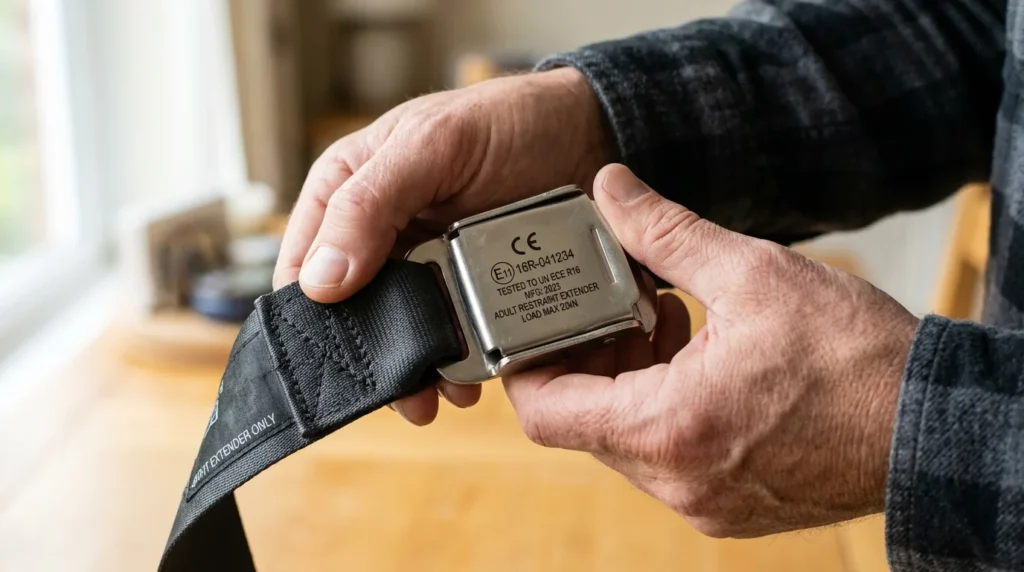
Certification markings on the buckle are your proof that the materials and manufacturing behind your seat belt extender have been independently verified. Never buy without them.
ECE R16: A comprehensive European regulation setting the standards for safety belts and restraint systems, confirming that the extender’s materials, construction, and performance have been independently tested to meet the requirements for seat belt components used in UK and European vehicles.
ISO 9001:2015: An international quality management standard certifying the manufacturing processes behind the product to guarantee that the same high-quality materials are used consistently in every unit produced, not just the samples that were submitted for testing.
DOT Registration: A U.S. Department of Transportation compliance standard confirming that the manufacturer adheres to one of the world’s most rigorous automotive safety frameworks, which signals a globally high standard of material quality and construction, even for extenders sold in the UK.
Why Should You Never Compromise on the Quality of a Seat Belt Extender?
A seat belt extender is not a mere accessory. It is a critical safety device that is only as reliable as the materials it is made from. Saving a few pounds on an inferior product is never worth the risk when the consequences of failure in a collision can be catastrophic and irreversible.
Damage Your Vehicle’s Original Seat Belt: An ill-fitting or poorly manufactured extender can stress, scratch, or damage your car’s original buckle mechanism, leading to costly repairs and potentially compromising the performance of your vehicle’s factory-fitted restraint system.
Fail in a Collision: An extender built from inferior materials can bend, break, or release under crash forces and remove the occupant from the restraint system at the exact moment it is needed most, with potentially fatal consequences.
Wear Out Quickly: Poor quality materials degrade faster under regular use, UV exposure, and temperature changes, meaning an inferior extender may fail unexpectedly long before it should, leaving you with a compromised safety device you may not even be aware of.
Get a Seat Belt Extender Built From Materials You Can Trust With Your Life
The materials used in a seat belt extender are fundamental to its safety and effectiveness. High-strength steel, durable plastics, and robust polyester webbing, combined with expert manufacturing and rigorous testing, ensure that a seat belt extender performs its life-saving function when it matters most. Always choose extenders from reputable suppliers like SeatbeltExtender.co.uk, who prioritise quality and safety certifications to guarantee you a product you can trust on every journey.
Ready to buy with confidence? Browse our full range of UK-tested, certified seat belt extenders, built from high-strength steel and high-tenacity polyester webbing, certified to ECE R16 and ISO 9001:2015, with free Royal Mail delivery on every order.
Mr Seatbelt
I'm a huge fan of travelling, and doing so safely. I write articles about seatbelts to help educate our customers. If you have any questions about seat belts, just ask!