Selecting a seat belt extender for your car might seem straightforward, but that’s not the case. You must ensure compatibility since it’s very crucial for both safety and functionality. With a myriad of car models and seat belt designs, there is no truly universal extender. Fitting the wrong one can create a false sense of security that is more dangerous than having no extender at all. We are about to dive into the complexities of car seat belt extender compatibility to ensure you choose the right product for your vehicle.
Why Does Seat Belt Extender Compatibility Matter?
A seat belt extender is a safety device, but its effectiveness depends entirely on a secure and precise connection with your car’s existing seat belt system. Using an incompatible extender doesn’t just fail to help. It also actively creates new dangers that would not exist without it.
- Void Your Insurance: Using a non-certified or incompatible seat belt extender that compromises your vehicle’s original safety system could be considered a modification that invalidates your car insurance policy, leaving you unprotected financially as well as physically in the event of an accident.
- Fail to Latch Securely: An incompatible extender may appear to click in but will not be fully engaged, which will create a false sense of security where the driver or passenger believes they are properly restrained when they are not, which can be fatal in a collision.
- Become Dislodged in a Collision: An extender that does not fit the buckle precisely may hold under normal driving conditions but release under the sudden forces of an impact and remove the occupant from the restraint system at the exact moment it is needed most.
- Cause Improper Belt Positioning: If the extender alters the geometry of the seat belt system, the lap belt can ride up over the abdomen instead of sitting across the hips, and the shoulder belt can shift onto the neck instead of crossing the chest, both of which significantly increase the risk of serious internal injury in a crash, even when the belt appears to be fastened.
- Damage Your Original Buckle: Forcing an incompatible extender into your car’s original buckle can bend, scratch, or damage the internal latch mechanism, which could result in costly repairs, a failed MOT, and a compromised seat belt system that may not perform correctly even without the extender fitted.
What Are the Key Factors That Determine Seat Belt Extender Compatibility?
Compatibility is not just about the extender physically inserting into the buckle, but also whether it locks, holds, and releases correctly under both normal and emergency conditions. Several factors determine this, and overlooking any one of them can result in an extender that appears to fit but fails when it matters most.
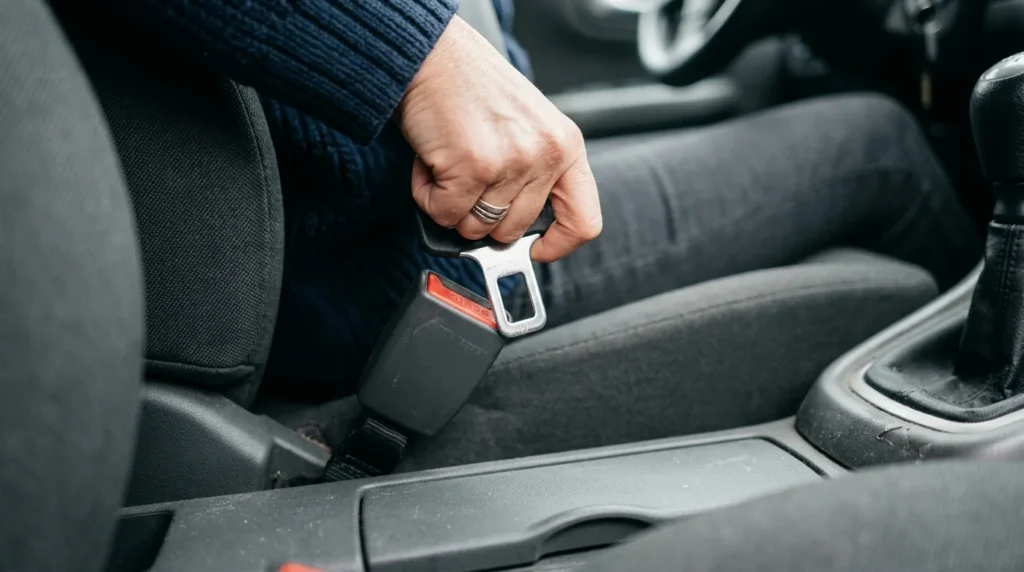
- Buckle Type(Tongue Width and Shape): This is the most critical compatibility factor because the metal tongue of the extender must precisely match the width, thickness, and shape of your car’s original seat belt tongue, not just fit loosely into the slot. There are generally three main types:
- Type A (7/8″ or 2.2cm): Commonly found in older vehicles and certain specific models so always verify against your exact vehicle rather than assuming by age alone.
- Type B (1″ or 2.5cm): The most widely used size across modern vehicles, though significant variations exist between manufacturers that make assuming compatibility dangerous.
- Type C (Manufacturer-Specific Designs): Some car manufacturers, including certain premium and European brands, use entirely unique buckle designs that require a custom-fit extender and will not accept a standard Type A or B tongue under any circumstances.
- Buckle Depth: The internal depth of your car’s buckle receptacle varies between vehicles. An extender tongue that is too short will not engage the latch mechanism fully, and one that is too long may apply pressure to the release button, both of which create a connection that can fail unexpectedly in a collision. Always verify the tongue length as well as the width.
- Rigid vs Flexible Extenders: There are two types of extenders that we are going to break down.
- Rigid extenders stand upright independently and are the best choice for buckles that are deeply recessed or hard to reach. They offer a stable, elevated connection point but require precise tongue compatibility, as there is no flexibility to compensate for a slight mismatch.
- Flexible extenders are built with a webbing strap that offers more adaptability in positioning and can be more forgiving with minor variations in buckle angle, but they are not suitable where the primary challenge is a deeply recessed buckle, and they still require precise tongue compatibility for a safe latch.
- Vehicle Make, Model, and Year: Buckle designs can change significantly between generations, facelifts, and even mid-cycle updates of the same model. An extender that fits a 2010 Ford Focus may not fit a 2020 Ford Focus, and an extender that fits the front seats of a vehicle may not fit the rear seats of the same car. You should always verify compatibility for every seat position the extender will be used in, not just the primary one.
- Aftermarket Seat Modifications: If your car has aftermarket seat covers, modified seats, or non-standard seat belt systems fitted by a previous owner, the buckle dimensions or positioning may differ from the manufacturer’s original specification, meaning standard compatibility guides may not apply, and direct verification with the supplier is essential before purchasing.
How Do You Determine Whether a Seat Belt Extender Is Compatible With Your Car?
There are four reliable methods for confirming compatibility before purchasing and using more than one of them significantly reduces the risk of ordering the wrong extender. Never rely on visual similarity alone, as buckles that look identical can have different internal dimensions that affect latch performance.
- Use a Compatibility Database: Reputable seat belt extender suppliers like SeatbeltExtender.co.uk provide comprehensive compatibility databases searchable by car make, model, and year and cross-references thousands of vehicle specifications to return only extenders confirmed to fit your exact vehicle. This is the fastest and most reliable method for most UK drivers and should always be the first step before purchasing.
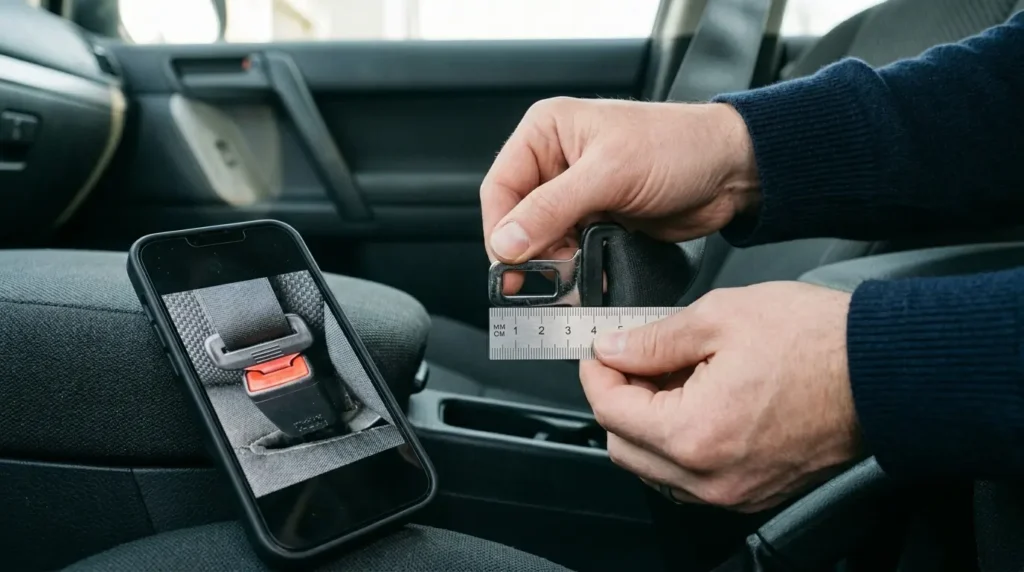
- Contact the Supplier Directly: If you are still uncertain after measuring and checking the database, contact the supplier directly with your car’s make, model, year, and a photograph of your existing seat belt tongue and buckle. A specialist supplier will be able to confirm compatibility with certainty, and a reputable one will tell you honestly if no compatible extender exists for your vehicle rather than selling you something that does not fit.
- Measure Your Existing Seat Belt Tongue: The most reliable method is to measure the metal tongue of your car’s existing seat belt directly. Note the width at its widest point, the thickness, and the shape of the cut-outs and take a clear photograph from both sides for reference. This single step eliminates the most common cause of compatibility errors and takes less than two minutes.
- Consult Your Car’s Manual: Some car manuals include specifications for seat belt components, though detailed buckle tongue dimensions are rarely listed. However, the manual can confirm whether your vehicle uses a manufacturer-specific buckle design which is a strong signal that a standard Type A or B extender may not be suitable and that a custom-fit option should be sought.
Which Car Models Are Known to Have Incompatible Seat Belt Buckle Designs?
Some car manufacturers use proprietary buckle designs that are deliberately engineered to accept only the original seat belt tongue. This makes aftermarket compatibility genuinely difficult or impossible regardless of how well the extender appears to fit. Always check the supplier’s incompatibility list before purchasing, and never assume compatibility based on the extender appearing to click in.
- Vehicles With Integrated Buckle Designs: Some models across all manufacturers integrate the buckle directly into the seat structure rather than mounting it on a stalk. These recessed or flush-mounted designs can make even a correctly sized extender tongue physically impossible to insert without the buckle first being raised, making a rigid extender the only viable option in some cases.
- Korean Manufacturers: Certain Hyundai and Kia models, the newer generations, use buckle designs with non-standard tongue widths or internal latch mechanisms that reject standard Type A and B extender tongues. Compatibility varies significantly between model years of the same vehicle.
- Japanese Manufacturers: Some Toyota, Honda, and Nissan models use manufacturer-specific buckle designs, particularly in their newer and premium model lines. The Nissan Qashqai, for example, requires careful compatibility verification as buckle designs have changed across generations.
- American Manufacturers: Certain Ford, GM, and Chrysler models, particularly those imported directly from the US market rather than built to European specification, may use FMVSS-standard buckles that differ dimensionally from ECE R16 compatible designs commonly found in UK vehicles.
- German Manufacturers: Premium German brands, including BMW, Mercedes-Benz, and Audi, frequently use proprietary buckle systems, especially in newer models fitted with pre-tensioners and load limiters, where the buckle housing dimensions or internal mechanism design prevent a secure connection with standard aftermarket extender tongues.
- Chinese Manufacturers: As Chinese vehicle brands, including MG, BYD, and GWM, expand rapidly in the UK market, their buckle designs are not yet fully mapped across standard compatibility databases, making direct supplier verification essential before purchasing an extender for any Chinese-manufactured vehicle.
Why Does Quality and Certification Matter When Choosing a Seat Belt Extender?
Compatibility alone is not enough. A correctly fitting extender built from inferior materials or without independent certification is still a safety risk in a collision.
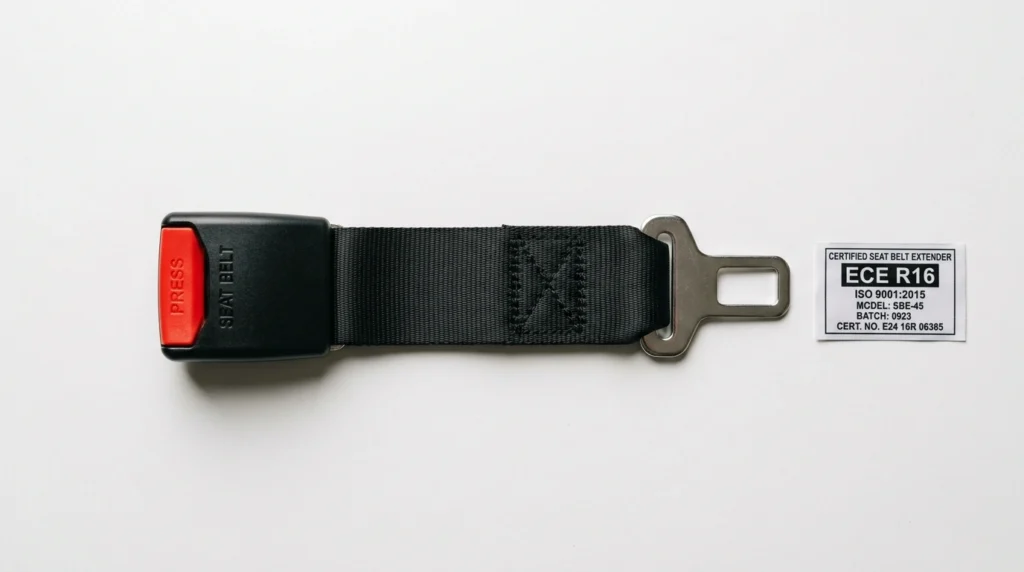
- Check for a Warranty: A reputable manufacturer backs their product with a minimum one-year warranty. No warranty on a safety device is a direct indicator of low manufacturing confidence.
- Certified to International Safety Standards: Choose extenders certified to ECE R16, ISO 9001:2015, or DOT registration. These confirm independent testing for tensile strength, buckle release force, material durability, and crash performance. An uncertified extender can fit perfectly and still fail under real impact forces.
- From Reputable Specialist Suppliers: Buy from companies like https://seatbeltextender.co.uk/ that specialise in seat belt products and can provide certification documentation on request. Generic marketplace sellers rarely carry verifiable credentials, offer compatibility guarantees, or provide expert support.
- Avoid Counterfeit Products: The market contains counterfeit extenders with fake certification markings, particularly on general online marketplaces. If a product is priced significantly below market rate and lacks verifiable documentation, treat it as uncertified regardless of what the listing states.
Get a Seat Belt Extender That Fits Your Car Perfectly and Works When It Matters
Choosing the right seat belt extender is a critical safety decision. By checking your car’s buckle type, using a compatibility guide, and selecting a certified product from a specialist supplier, you can ensure a secure, correctly fitting extender that performs reliably in an emergency.
Not sure which extender fits your car? Use our free compatibility checker. Enter your car make, model, and year, and we will show you exactly which certified extender matches your buckle.