Travelling with children is one of life’s great adventures, but keeping them safe and comfortable in the air requires a little more preparation than most parents expect. One question that comes up regularly is whether a standard aircraft seat belt will fit correctly around a child, especially with an approved child restraint system or when flying with a toddler who needs a secure and comfortable fit for a longer journey. The rules around children and seat belt extenders on aircraft are stricter than many parents realise, and getting it wrong at the gate can cause real disruption to your travel plans. Here we talk about everything UK parents need to know before they fly.
Why Might a Parent Consider a Seat Belt Extender for Their Child on a Flight?
There are a small number of genuine situations where extra belt length is a legitimate consideration for travelling with children. However, each one comes with important caveats that parents need to understand before requesting or using an extender.
Comfort for Larger Children: Older or larger children may find a standard aircraft lap belt uncomfortably snug across the hips on longer flights, particularly if they are at the upper end of the child size range but not yet comfortable with a fully adult-length belt. A small amount of additional length can make a meaningful difference on a transatlantic or long-haul journey without introducing dangerous slack.
Use With Specific Child Restraint Systems: The vast majority of child car seats are not approved for use with seat belt extenders on aircraft, and using one in that context is unsafe. However, certain aviation-approved child restraint devices, such as the CARES harness, have specific installation requirements that may involve the aircraft seat belt being routed in a way that requires a small amount of additional length. Always follow the restraint manufacturer’s instructions precisely and confirm with the airline before you fly.
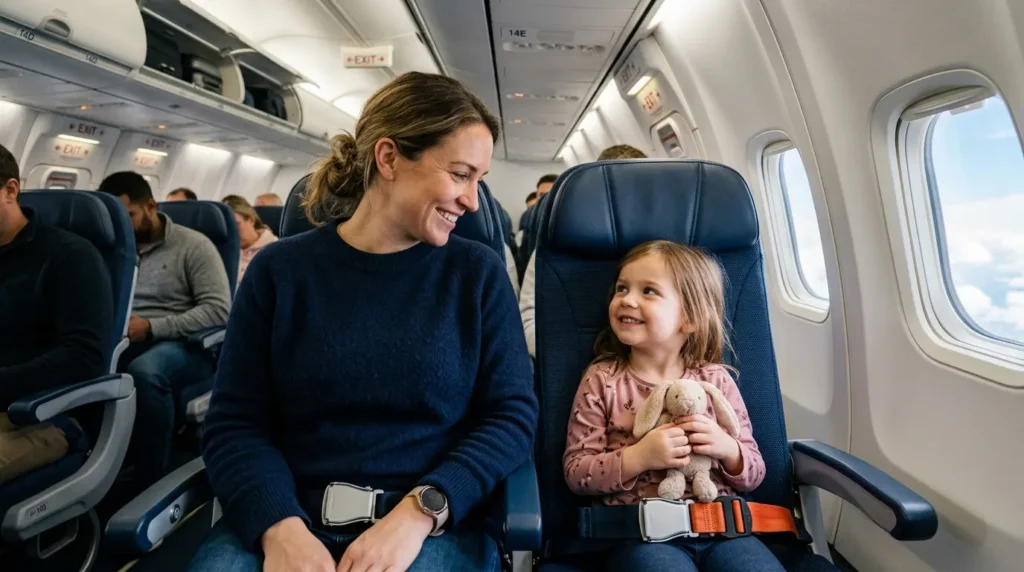
Ease of Buckling for Toddlers: Young children transitioning out of infant lap restraints can be wriggly and difficult to buckle quickly. A slightly extended belt can make the fastening process faster and less stressful for both parent and child, particularly during turbulence when speed matters. That said, the belt must still fit snugly once fastened, with no excessive slack across the lap.
Are Airplane Seat Belt Extenders Safe for Children?
For children who have outgrown child restraints but still find standard seat belts uncomfortably snug, an airline-issued seat belt extender can provide a more comfortable fit during flights.
Safety is the only consideration that matters here, and the answer depends entirely on how and why the extender is being used.
For children using an approved child restraint system, including infant carriers, forward-facing car seats approved for aviation use, and harness devices like the CARES harness, a seat belt extender must never be introduced unless the restraint manufacturer’s instructions explicitly permit it for that specific installation method.
Child restraint systems are crash and turbulence-tested without extenders present. Adding one changes the belt geometry, reduces installation tension, and creates an untested configuration that no aviation authority or restraint manufacturer will certify as safe.
For children who have outgrown child restraints and are using the aircraft lap belt directly, an airline-provided extender can be a safe option when the standard belt is genuinely too short for a comfortable fit. They must be airline-provided, as these extenders are certified for the specific aircraft type and buckle design, which a personal extender is not.
A belt that is too loose, even slightly, can allow a child to slip under the lap belt during severe turbulence, which is one of the most common causes of in-flight injury for unrestrained or poorly restrained passengers. If you are unsure whether your child needs an extender, ask the cabin crew before the doors close. They can assess the fit and provide a certified extender immediately if needed.
Can You Bring Your Own Seat Belt Extender for Your Child on a Flight?
The rules here are the same as they are for adult personal extenders. The answer is almost always no, even though you can influence the purchase of one if it’s your privately owned plane.
All equipment used on a commercial aircraft must be certified for that specific aircraft type and buckle system. A personal extender purchased online, even one marketed as aviation-safe or FAA-compliant, is not automatically approved for use on every aircraft.
Cabin crew is trained to identify and remove uncertified equipment, and a personal extender presented for a child is likely to attract more scrutiny than one for an adult because the stakes of a poorly fitted restraint are higher for a smaller passenger.
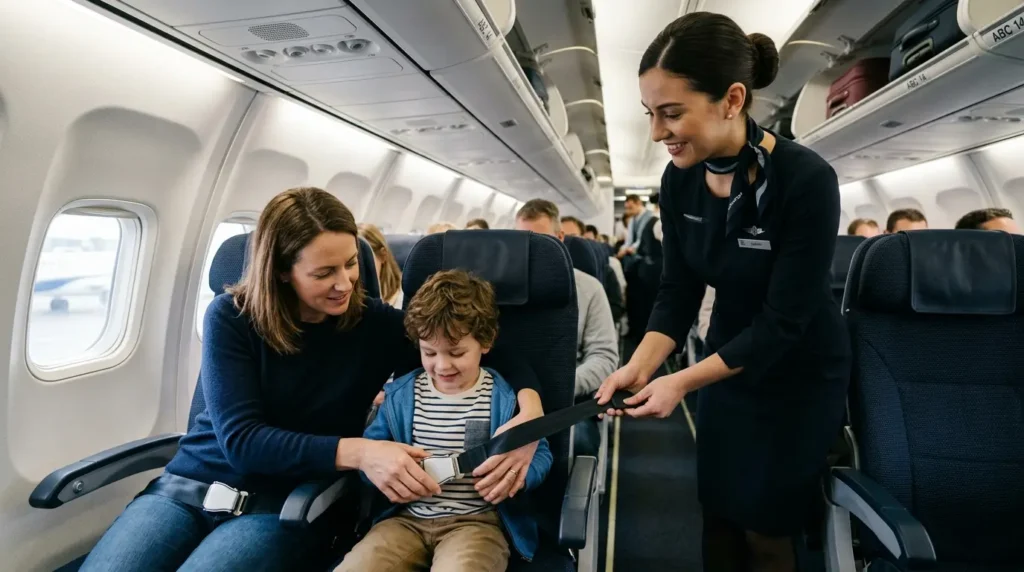
Request One From Cabin Crew Onboard: The only guaranteed safe option is an airline-provided extender. It is certified for that aircraft, compatible with the buckle, and sized appropriately. Request before you sit down, if possible. Asking early gives the crew time to source the right size and ensures it is fitted correctly before the plane hits the taxiway.
Check With Your Airline Before You Fly: Policies vary between carriers. Some full-service airlines are more accommodating than budget carriers, and a small number may permit personal extenders that meet specific certification criteria. Contact the airline directly before travel, not at the gate, and get confirmation in writing if possible. If you are travelling with a child who genuinely needs an extender on every flight, knowing the policy in advance removes the risk of a difficult conversation at boarding.
How Do You Request a Seat Belt Extender for Your Child on a UK Flight?
The process is straightforward, and cabin crew handles these requests routinely. There is no need to feel awkward about asking.
When used appropriately, airline-issued seat belt extenders can provide a secure and comfortable fit for children during flights, ensuring their safety and comfort.
Ask Before You Sit Down if Possible: If you know your child will need an extender, mention it to a crew member at the aircraft door as you board. This gives them time to locate the right size before the safety demonstration begins rather than when the crew is occupied with final checks.
Ask Discreetly if Needed During Boarding: If you did not mention it at the door, flag a flight attendant as soon as you are seated. A simple, quiet request is all that is needed. Cabin crew is trained to handle this without drawing attention to you or your child.
Verify the Fit Before Taxi: Once the extender is provided, fasten it yourself rather than leaving it to the child. The lap belt must sit low across the hips, not across the stomach, and must be snug with no excessive slack. A belt that can be lifted more than a couple of inches from the lap is too loose. If the fit does not feel right, ask the crew member to check it before they move on.
Tips for Smooth Air Travel With Children From the UK
A little preparation before you reach the airport makes a significant difference to how the journey unfolds for both you and your child.
Research Your Airline’s Policies in Advance: Check the airline’s website or call their customer service line before the travel day. Ask about child restraint systems, seat belt extenders, and whether you can flag the request at check-in. Budget carriers and full-service airlines handle these situations very differently, and knowing in advance means no surprises at the gate.
Flag Special Requirements at Check-In: If your child needs a seat belt extender or you are travelling with an aviation-approved child restraint system, mention it at the check-in desk. Many airlines can note it on your booking so a crew member has what you need ready before boarding begins.
Communicate Openly With Cabin Crew: Flight attendants are experienced with families and children. Do not hesitate to raise any concern about your child’s comfort or safety as soon as you board. A good crew member will always prioritise getting a child correctly and comfortably restrained over a quick turnaround.
Pack Smart for the Cabin: Familiar comfort items, snacks the child already likes, and age-appropriate entertainment loaded offline make a measurable difference on longer flights. For toddlers, a familiar small toy or comfort blanket also helps with the unfamiliar environment of an aircraft cabin.
Dress in Layers: Aircraft cabin temperatures fluctuate noticeably between takeoff, cruise altitude, and descent. Dressing your child in easily removable layers means you can adjust quickly without disrupting other passengers or disturbing a sleeping child.
Prepare Before You Fly and Your Child Will Enjoy the Flight
Ensuring your child’s safety and comfort in the air comes down to preparation. Personal seat belt extenders are rarely permitted on commercial flights, but airline-provided extenders are available on every aircraft, and cabin crew are ready to help the moment you ask. The key is knowing your airline’s policy before you travel, understanding which child restraint systems are aviation-approved, and never assuming that a ground-certified product is cleared for use in the air.
If you fly privately in your own light aircraft or helicopter, where there is no crew and no airline-provisioned equipment onboard, sourcing the right extender before you fly is entirely your responsibility. In that case, a ground-certified road extender is not sufficient. You need an extender built and certified specifically for aviation use.
Flying privately with children and need a certified aviation extender? Browse our range of FAA-compliant airplane seat belt extenders, designed specifically for aviation use, built to the standards that matter in the air, and delivered free across the UK via Royal Mail.
Mr Seatbelt
I'm a huge fan of travelling, and doing so safely. I write articles about seatbelts to help educate our customers. If you have any questions about seat belts, just ask!