
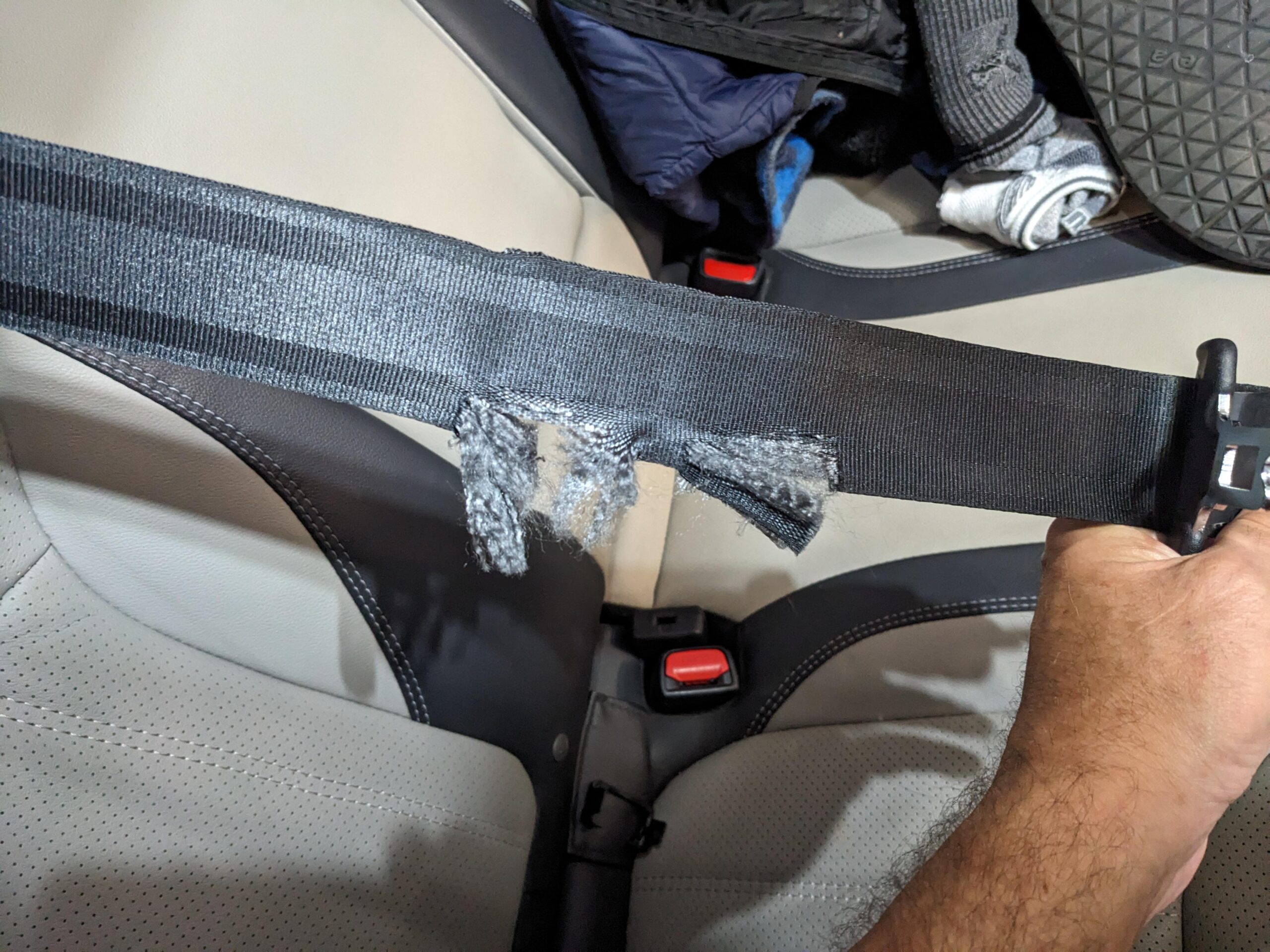
You are running through your pre-MOT checklist when you notice it: a section of seat belt webbing that looks worn, frayed, or slightly damaged. Your heart sinks. Will it fail the MOT? Is it even legal to drive with it? And can you fix it yourself?
This guide answers all of those questions clearly and practically, walking you through what the MOT tester is actually looking for, whether a frayed seat belt is illegal in the UK, and what your options are for getting it sorted before test day.
The short answer is: it depends on the severity of the damage, but you should treat any fraying as a serious issue and address it immediately.
Under UK law, every driver has a legal obligation to ensure their vehicle is roadworthy. The seat belt is a primary safety system, and if it is damaged to the point where it could fail in a collision, driving with it is both illegal and dangerous.
The Highway Code and the Road Vehicles (Construction and Use) Regulations 1986 require that seat belts are maintained in good working order and free from defects. A belt with minor surface wear may pass an MOT, but one with visible fraying of the webbing — particularly at stress points near the buckle or the retractor — is likely to result in a Major fault or even a Dangerous fault, which means an immediate MOT failure.
During an MOT, the tester will inspect every seat belt in the vehicle. They are checking for the following:
Webbing condition. The tester will visually inspect the full length of the belt for cuts, fraying, burns, or significant fading that may indicate UV degradation of the fibres. Any damage to the webbing’s structural integrity is a failure point.
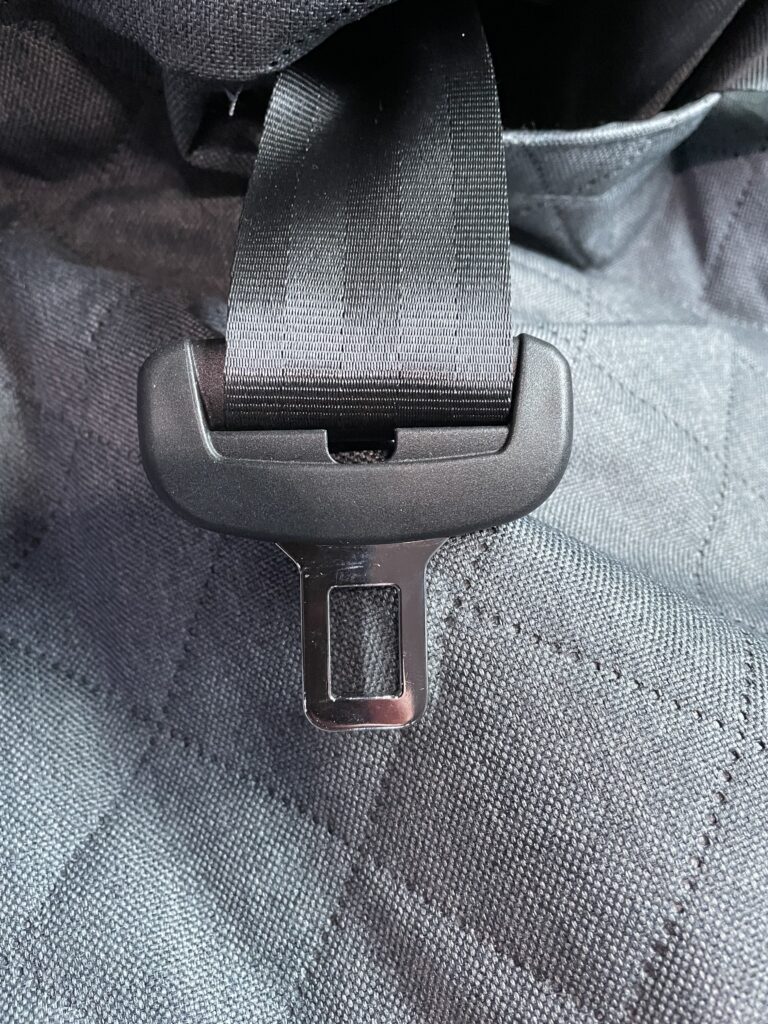
Buckle function. The buckle must click securely and release cleanly. A buckle that is stiff, sticky, or does not release immediately when the button is pressed will fail.
Retractor function. The belt must retract smoothly and lock correctly when pulled sharply. A retractor that does not lock — the mechanism that holds you in place in a collision — is a serious safety failure.
Mounting points. The anchor points where the belt attaches to the vehicle’s body must be secure, free of corrosion, and have no loose fixings.
This is where many drivers go wrong. There is a significant amount of misleading advice online suggesting that frayed seat belt webbing can be repaired with sewing, tape, or specialist fabric glue. This is dangerous advice, and you should ignore it.
Seat belt webbing is engineered to very precise specifications. The fibres, weave pattern, and tensile strength are all carefully calibrated to absorb crash energy in a controlled way. Any amateur repair — no matter how neat it looks — compromises the belt’s structural integrity and could cause it to fail at the worst possible moment.
The only safe and legal options for a genuinely frayed seat belt are:
A common related issue is a seat belt retractor that has become sluggish, jammed, or that no longer locks correctly. This is often caused by a buildup of dirt and dust, or by a small object caught in the mechanism.
Before assuming the retractor needs replacement, try the following:
Clean the retractor. With the belt fully extended, use a dry cloth to wipe down the full length of the webbing, removing any dirt or debris. Allow the belt to retract slowly, guiding it with your hand to ensure it winds back evenly. Repeat this process several times.
Check for obstructions. Sometimes a small object — a coin, a piece of grit — can jam the retractor mechanism. Inspect the retractor housing carefully.
Test the inertia lock. Pull the belt out quickly and sharply. You should feel it lock immediately. If it does not lock, the retractor mechanism is faulty and needs professional attention.
If cleaning does not resolve the issue, a retractor replacement is the correct course of action. This is a job for a professional, as the retractor in many modern vehicles contains a pre-tensioner charge that must be handled safely.
The best approach to seat belt maintenance is prevention. Here are the most common causes of premature seat belt wear and how to avoid them.
UV exposure. Prolonged exposure to direct sunlight degrades the synthetic fibres in seat belt webbing. If your car is regularly parked in direct sunlight, consider using a windscreen sunshade to reduce interior temperatures and UV exposure.
Chemical contamination. Cleaning products, sunscreen, and food and drink spills can all damage seat belt webbing. If you spill anything on a belt, clean it immediately with a damp cloth and allow it to dry fully before retracting it. Never use bleach or solvent-based cleaners on seat belt webbing.
Forcing a twisted belt into the retractor. Always ensure the belt is lying flat before allowing it to retract. Repeatedly retracting a twisted belt puts stress on the webbing and can cause premature wear.
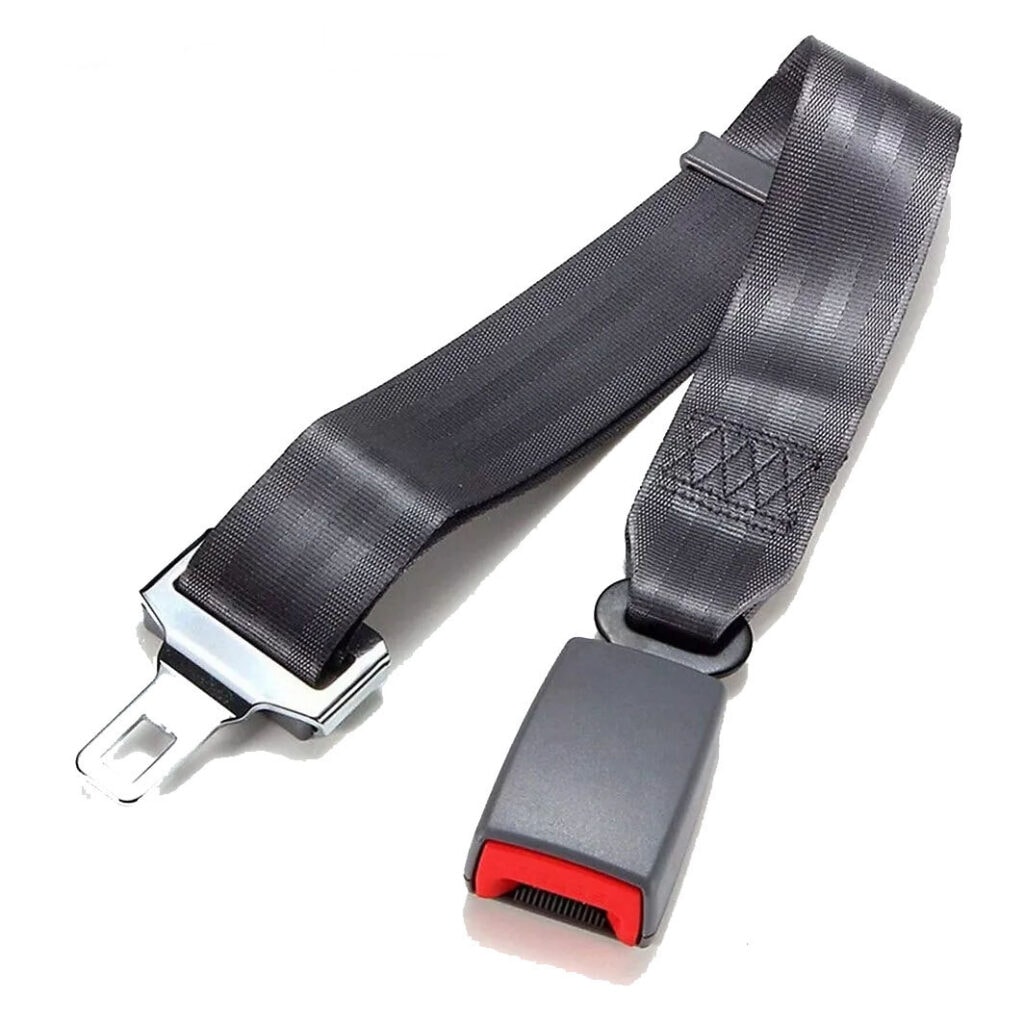
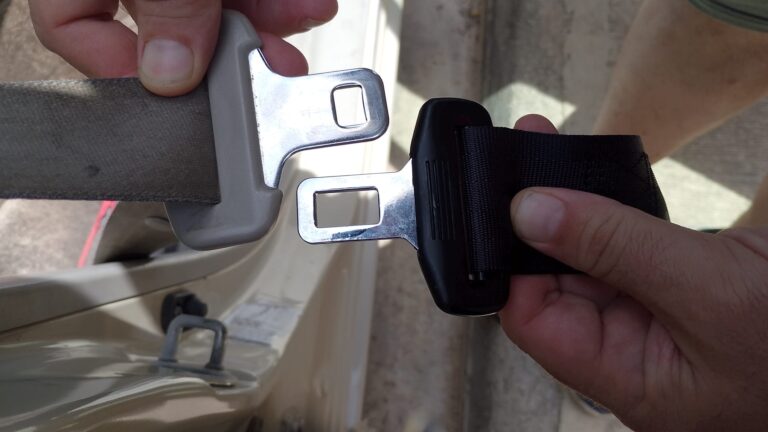
While a seat belt extender cannot fix a frayed or damaged belt — and should never be used as a workaround for a faulty belt — it can help prevent premature wear in the first place.
If you regularly find yourself pulling the seat belt to its absolute maximum length, the stress on the webbing at the buckle end is significantly higher than it would be with a more comfortable fit. A seat belt extender reduces that tension, allowing the belt to sit more naturally and reducing wear at the stress points.
A frayed seat belt is not something to ignore or patch up with a DIY fix. It is a safety-critical component that must be in full working order to protect you in a collision and to pass your MOT. If you notice any damage to your seat belt webbing or retractor, have it inspected and replaced by a professional as soon as possible.
And if comfort is contributing to the wear on your belt, explore our range of certified seat belt extenders at SeatbeltExtender.co.uk — a small investment that can extend the life of your belt and make every journey more comfortable.