
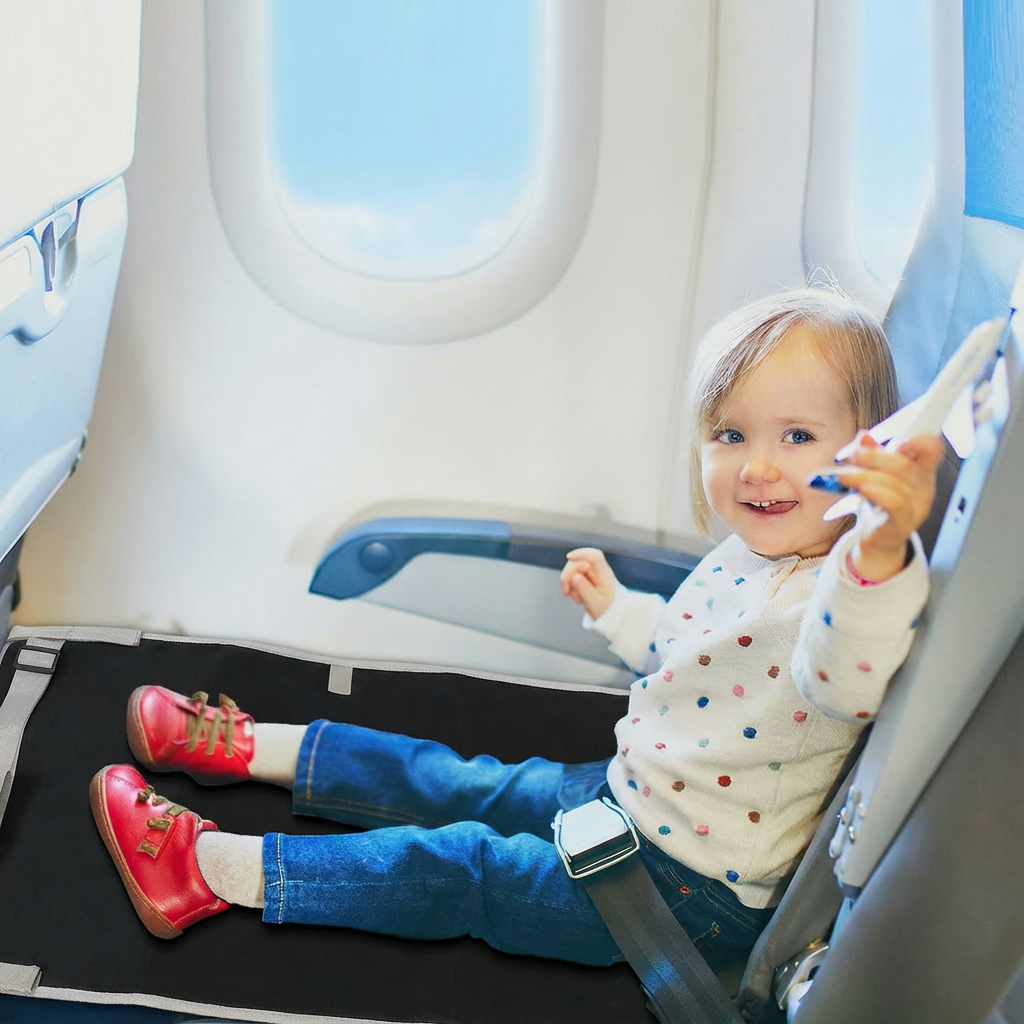
If you’ve ever tried to get a toddler to sleep on a 10-hour flight while confined to an economy seat, you’ll understand the challenge immediately. Fortunately, there’s now a growing category of travel products designed to make long flights more manageable for families—often called airplane seat extenders, inflatable airplane beds, footwell cushions, bed boxes, or toddler travel beds.
An aeroplane seat extender fills the gap between your child’s seat and the seat in front, creating a flat surface where little ones can stretch out and actually rest. Whether you’re facing a red-eye to London or an endless daytime travel to Tokyo, the right extender can transform a cramped journey into something almost manageable.
In this guide, we’ll break down exactly what these devices are, which ones work best for families in 2026, and the crucial airline policies you need to understand before you buy. Consider this your complete roadmap to helping your kids sleep comfortably at 35,000 feet.
An airplane seat extender is a device that bridges the legroom gap between your child’s seat and the seatback in front, allowing them to lie flat or elevate their legs during long flights. Think of it as converting that cramped economy seat into a miniature bed.
Before you start shopping, you’ll encounter several terms used interchangeably online, and knowing the differences will save you confusion:
The core benefit across all these products is identical: turning a standard 17-18 inch wide airline seat with roughly 30-31 inches of legroom into a space where children can actually sleep on overnight or 8+ hour flights.
Consider a practical example. You’re flying from London to Los Angeles—about 10 hours westbound. Your four-year-old typically sleeps from 7 pm to 7 am. By the time you’ve taken off, eaten dinner, and reached cruising altitude, it’s their normal bedtime. Without somewhere to lie down, you’re looking at hours of them squirming, crying, or watching endless cartoons while getting progressively more overtired.
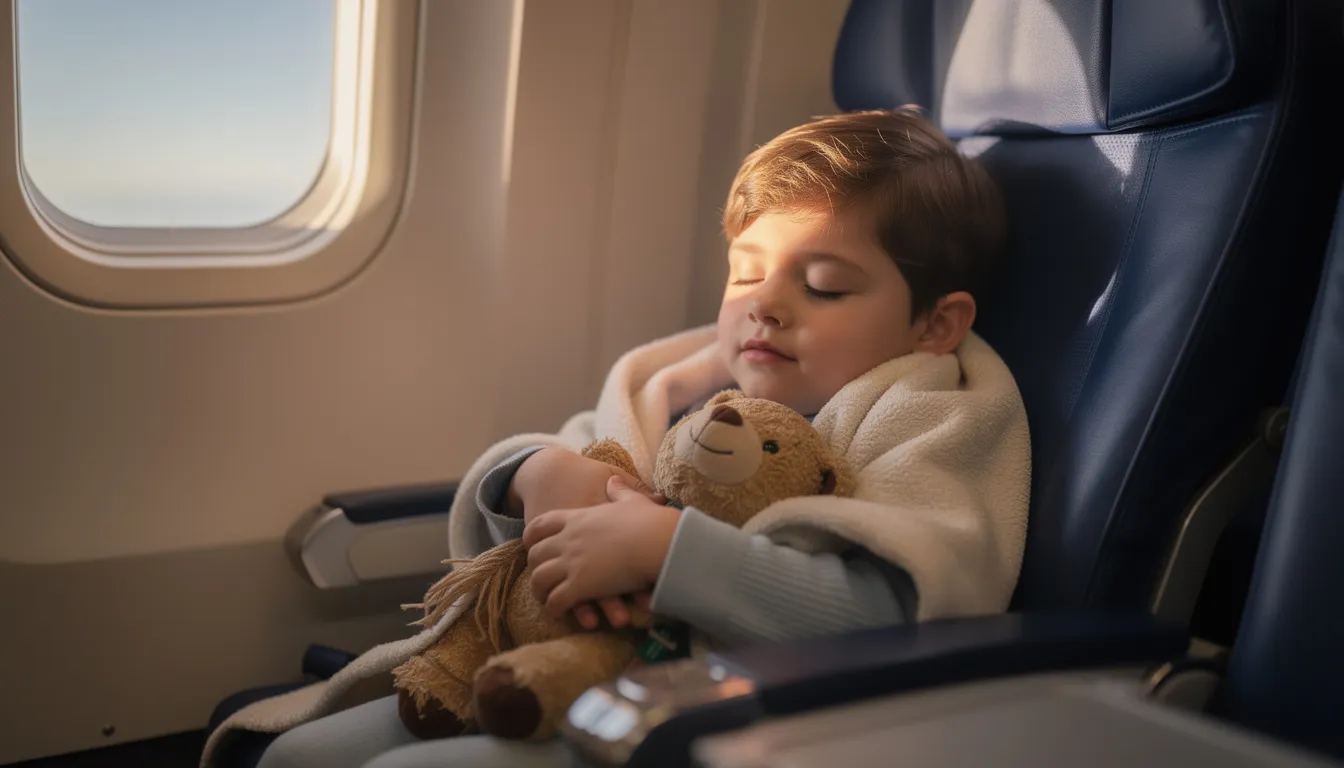
With a toddler aeroplane seat extender, that same child has a flat surface to curl up on, mimicking their bed at home. Parents consistently report that this makes the difference between arriving at your destination with a reasonably rested child versus a complete meltdown in immigration.
For children under approximately 40 pounds (18 kg), FAA guidance still prioritises approved child restraint systems—like a properly installed car seat or a CARES harness—during taxi, takeoff, landing, and turbulence. A seat extender supplements comfort during the cruise portion of your flight, but doesn’t replace proper restraints when required.
These devices are used only at cruising altitude and must be removed or stowed immediately upon instruction from the cabin crew. The seatbelt sign coming on means the extender needs to come down—no exceptions.
Not all products called “seat extenders” are identical. The design affects both comfort level and whether specific airlines will allow them on board. Understanding the categories helps you identify which type fits your situation.
Inflatable footwell cushions
Hammock-style extenders
Bed box ride-on suitcases
Generic airplane footrest cushions
Each style physically fills the space between your child’s seat and the seatback in front. Inflatable options use air chambers to create a stable platform at adjustable heights—usually 4-8 inches, depending on your aircraft’s seat pitch. The child’s legs rest on top, and their torso remains on the original seat with the lap belt still accessible.
Rigid bed boxes create a similar bridge using their hard-shell structure, while hammock styles use tension from adjustable snaps and straps to suspend the fabric across the gap.
The products below have been widely used by families on long haul flights between 2022-2026. These selections focus on practicality, comfort, and known airline attitudes where available—not sponsorship deals.
Pricing reflects early 2026 estimates and will vary by retailer and region.
The BedBox is perhaps the most recognised name in this space, and for good reason. It’s a hard-shell ride-on suitcase that converts into a legrest and a flat surface, designed for children aged 2-7.
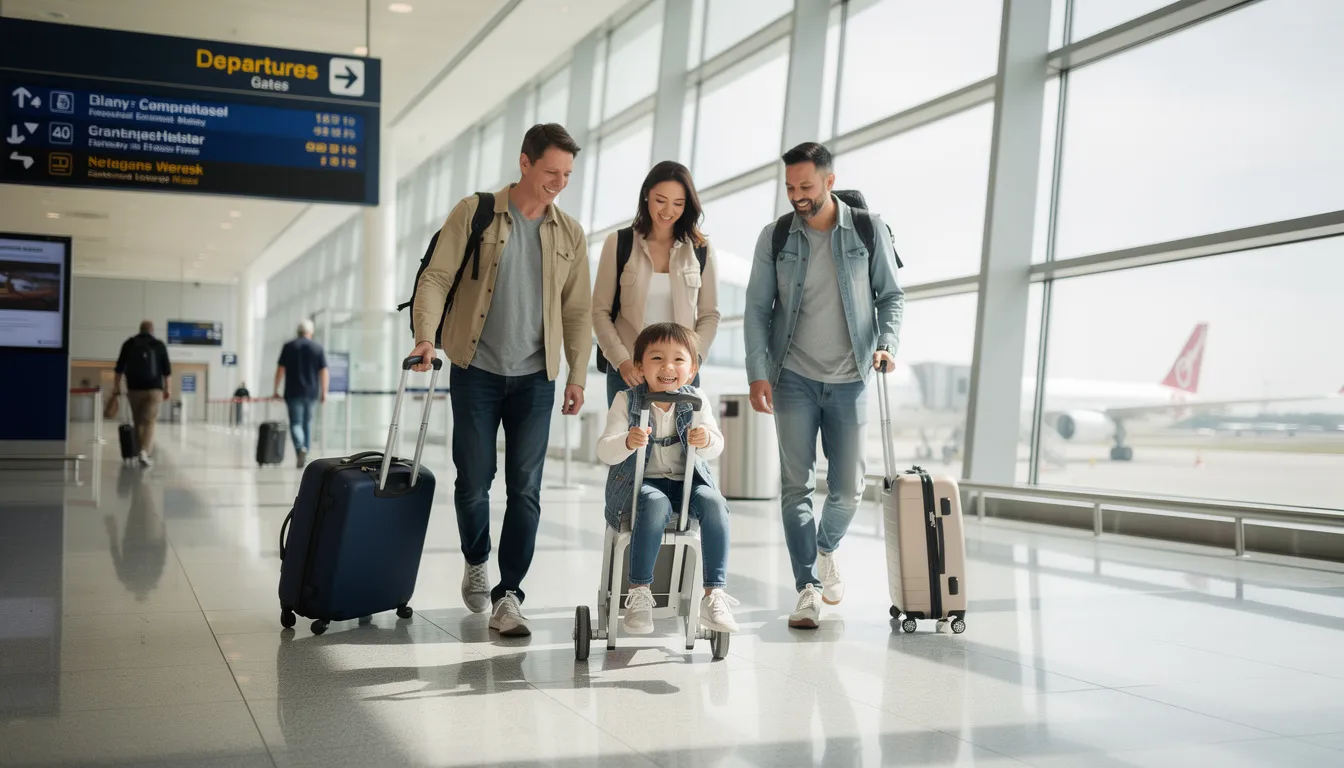
How it works: Children ride the BedBox through airports using swivel front wheels and a pull-along strap—making those endless terminal walks significantly easier. On board, the case opens to reveal a fold-out mattress that bridges the gap to the seat in front, creating a bed surface for rest.
Key features:
Airline acceptance: As of late 2024-2026, carriers including Virgin Atlantic and several European airlines permit BedBox with restrictions. Singapore Airlines has historically allowed similar devices on selected routes. However, policies change frequently—always verify directly before your flight.
Drawbacks to consider:
The BedBox makes most sense for frequent travellers who’ll use it across multiple trips, justifying the higher cost per journey.
Plane Pal is an inflatable footwell cushion designed for kids aged 2-8. Made from smooth, durable vinyl, it’s one of the most commonly cited products in airline policy discussions.
How it works: The cushion inflates using a hand pump (included in the carry bag) and sits in the footwell, filling the gap between seat and seatback. It can be positioned lengthways or widthways to fit different seat pitches and footwell widths across Airbus and Boeing economy cabins.
Key features:
Trade-offs:
Similar generic cushions exist on Amazon and other marketplaces, but Plane Pal is purpose-built for airplane travel and is often specifically named in airline policies—for better or worse.
There are similarly named products in this category; we’re focusing on the inflatable platform that spans from seat to seatback to create a complete bed surface.
How it works: The Flyaway-type bed inflates using one-way valves and includes pressure-release features that help maintain firmness without over-inflation in pressurised cabins at cruising altitude. It creates a stable, flat surface that supports the child’s full body weight.
Key features:
Airline status: By late 2024, the Flyaway had formal approval on at least one major carrier—British Airways confirmed that certain IATA-compliant seat extenders could be used under strict conditions at cruising altitude. This represents a significant shift in airline attitudes.
Practical notes:
Products like the Air Cot or similar hammock seat extenders take a different approach. Rather than filling the footwell, they attach to the tray table and seat frame to create a fabric sling.
How they work: Using adjustable straps secured to armrest hinges and the tray table edge, these devices suspend a durable, washable fabric platform that supports the child’s legs and lower body.
Key characteristics:
Important limitations:
Best use cases: Toddlers on daytime flights who want to stretch their legs rather than sleep for extended periods. Also useful for kids who get restless and need somewhere to put their legs besides kicking the seat in front.
Amazon and other marketplaces offer numerous low-cost inflatable footrests—brands like Koala Kloud, Sunany, and many unbranded options—often priced under $40 / £30.
What you’re getting:
What to watch for:
Our take: Generic options work well as a “first experiment” for families unsure whether a seat extender will suit them. If your child takes to it and you fly regularly, consider upgrading to a purpose-built product with better airline recognition.
Seat extenders aren’t formally “required” by any airline. But for certain journeys, many parents consider them non-negotiable.
| Flight Type | Examples | Why an Extender Helps |
|---|---|---|
| Red-eye transatlantic | New York–London, Los Angeles–Paris | Overnight timing means the child should sleep 6+ hours |
| Long daytime sectors | Los Angeles–Tokyo, Sydney–Singapore | 10-14 hours with no natural sleep opportunity |
| Overnight Europe–Asia | Frankfurt–Singapore, London–Hong Kong | Crossing multiple time zones while child needs rest |
| Multi-sector journeys | Any routing with 3+ flights in 48 hours | Accumulated fatigue makes in-flight sleep critical |
Seat extenders are most useful once kids have outgrown rear-facing car seats but still sleep best lying flat—roughly ages 2-7. Children under 2 are typically better served by a car seat or bassinet (for infants on bulkhead seats). Children over 7-8 often adapt better to sleeping upright in regular seats.
Some scenarios make seat extenders particularly valuable:
Don’t bother setting up a seat extender on very short flights under 2-3 hours. By the time you’ve waited for cruising altitude, inflated the device, and settled the child, you’ll be beginning descent preparation. The setup time exceeds any benefit.
Remember that extenders are just one part of a sleep strategy. Routine matters—bring familiar toys, maintain normal meal timing, and limit screen time before expected sleep. The device creates the opportunity; everything else supports it.
Safety and airline rules should be the first thing you check—before looking at price, colours, or which influencer recommended what. Getting this wrong means you’ve spent money on something you can’t use.
As of this writing, airline policies differ significantly:
Comfort devices are only helpful when they don’t compromise restraint and evacuation safety – seatbelts remain the baseline safety tool on every journey.
The universal truth: Final authority always lies with the captain and cabin crew, even if the airline website appears to allow your device. A policy change, a different aircraft configuration, or crew discretion can override any web page.
Regardless of airline policy, seat extenders cannot be used during:
Seat restrictions also apply:
When researching your specific airline, search their website for:
If in doubt, email the airline directly and save the response for reference.
Even when a seat extender is in use, your child’s lap belt must remain visible and properly fastened whenever required by the crew. The extender doesn’t replace the seat belt—it supplements the seating surface.
If you’re also worried about whether the aircraft belt will fit comfortably for adults in your party, see our guide to typical airplane seat belt lengths and how extenders work.
For younger children: Under FAA and EASA guidance, the safest place for infants and toddlers is an approved child restraint system (CRS) such as a properly installed car seat or a CARES harness. A baby or toddler lying loose on a bed surface without restraint is not recommended, particularly for turbulence.
For road trips to your destination, it’s also worth checking whether your child’s seat belt fit is safe without a booster.
Practical approach: For children under roughly 2 years or under 40 pounds (18 kg), prioritise a certified car seat or appropriate restraint first. Use any extender only for supervised rest periods when conditions allow and crew has confirmed it’s acceptable.
Weight limits matter: Each device has a manufacturer’s maximum weight limit—often 25-50 kg (55-110 lb). Exceeding this risks sudden collapse. Check instruction manuals and keep digital copies on your phone to show the crew if questioned.
Specific policies shift regularly, but here’s the general landscape as of mid-2025:
More permissive carriers:
More restrictive carriers:
Always verify within a few weeks of departure. A two-year-old blog comment is not a reliable policy source. Airline safety reviews can change rules at any time.
Preparation makes everything easier. Test-inflate or assemble your device at home before the trip. You don’t want your first attempt at setup to happen in a cramped seat at midnight with a tired toddler.
Assuming you’re in a standard economy window seat with a child seat extender that’s been approved for your airline:
The device creates the opportunity; routine seals the deal:
Keep your pump and extender in a separate, easy-reach pouch inside your carry-on. You don’t want to be emptying your entire bag in the aisle while passengers wait to use the bathroom.
A small zippered packing cube works perfectly—extender, pump, blanket, and sleep toy all in one grab-able package.
Window seats are usually best for seat extenders:
Middle seats in a 3-seat block work when travelling as a family:
Bulkhead seats present challenges:
Exit rows are off-limits for any seat extender due to evacuation requirements. Don’t attempt it.
Aisle seats are problematic because extenders may protrude into the aisle, creating safety issues. Crew will likely require removal.
Visualising correct positioning: Your child’s legs should form a straight line from hips to feet across the extender—not a downward “L” shape that leaves them half-sitting. Adjust inflation or height settings until the surface is level with the seat cushion.
After each flight:
Before storage:
Longevity expectations:
Emergency repairs:
Many airlines—especially in North America—currently prohibit most seat extenders. That doesn’t mean you’re out of options for helping kids sleep comfortably.
Padded seat covers and blankets
Travel pillows designed for children
Strategic sleep environment
Your seat choice affects sleep quality significantly:
| Seat Type | Advantages | Disadvantages |
|---|---|---|
| Window seats | Harder to exit for the bathroom | Often quieter, with less foot traffic |
| Rear of cabin | Rear of the cabin | Near bathrooms, potential queue noise |
| Extra legroom seats | More space to stretch | Higher cost, may have restrictions |
| Red-eye flights | Natural sleep timing alignment | Premium pricing for popular routes |
Consider booking flights aligned with your child’s natural sleep window, even at slightly higher fares. A child who boards already drowsy is far easier to settle than one who’s been stimulated all day.
Some products and approaches create more problems than they solve:
Treat viral social media “hacks” with scepticism. That TikTok showing a child sleeping across two rows was probably filmed before the crew noticed. Always prioritise official airline safety guidance over influencer content.
Are airplane seat extenders legal on flights to and from the US in 2026? There’s no federal law banning them outright, but most US carriers prohibit inflatable devices in the footwell under their individual safety policies. Your device may be technically “legal,” but it may still not be permitted on your specific flight. Always check with your airline directly before travelling.
Can I use a seat extender in premium economy or business class? Generally no. These cabins have different seat configurations—often with built-in footrests, lie-flat capability, or footwells that don’t accommodate standard extenders. The seat pitch and structure differ significantly from economy, making most products incompatible.
Will a seat extender fit on smaller jets like the Embraer 175 or Airbus A220? Possibly, but dimensions vary. Regional jets often have narrower seats and different footwell configurations. Measure your specific extender against the aircraft’s published seat specifications on SeatGuru or similar sites. Some inflatable options can be partially inflated to fit tighter spaces.
Is it safe for my 18-month-old to lie flat on a seat extender rather than use a car seat? No. For children weighing approximately 40 pounds (18 kg) or less, safety authorities recommend an approved child restraint system during all flight phases. A toddler lying unrestrained on a flat surface cannot be properly secured during turbulence or emergency situations. Prioritise a car seat or CARES harness first.
Do airlines count a BedBox as my child’s carry-on allowance? Typically yes. Most airlines treat the BedBox as the child’s carry-on item since it meets standard cabin baggage dimensions. Some carriers allow an additional small personal item. Check your specific airline’s baggage policy—this varies and affects what else you can bring for entertainment and supplies.
How early should I practice using my inflatable seat extender before our trip? Give yourself at least two weeks. Practice inflating, positioning, and deflating multiple times at home. How long does setup take? Have your child lie on it to test comfort. This builds familiarity for both of you and reveals any issues before you’re in a cramped cabin at midnight.
What happens if the crew tells me to put the device away mid-flight? Comply immediately. The crew have final authority on all cabin safety matters. Deflate or fold the device quickly, stow it under the seat or in the overhead bin, and resettle your child in the normal seated position. Don’t argue—it won’t change the outcome and may escalate the situation.
How do I clean my seat extender after a flight—are they hygienic? Wipe inflatable surfaces with baby wipes or mild disinfectant after each use, focusing on air valves and seams. Allow complete drying before storage. The floor of aircraft cabins is cleaned between flights but not sanitised. Using a thin, fitted sheet or blanket between your child and the extender adds a layer of hygiene.
Do I need a fitted cover for my seat extender? Not essential, but helpful. A thin cotton sheet tucked around the extender keeps your child’s skin off the vinyl surface (for more comfort and less sweating) while creating a barrier against floor contact. Some manufacturers sell custom covers; a standard baby crib sheet often works for compact models.
How many trips will a seat extender typically last? Quality products like Plane Pal, Flyaway, or BedBox typically last 3-5 years with proper care. Generic options may show wear after 10-20 flights. Given that a single device can handle dozens of long-haul flights across multiple children, the cost per journey becomes quite reasonable—often under £5 per use.
Can I resell my seat extender when my kids outgrow it? Yes. Well-maintained extenders from recognised brands retain value on resale platforms. Clean thoroughly, photograph any wear, and price accordingly. Many parents actively seek second-hand options given the limited usage window (ages 2-7). BedBox units, in particular, hold resale value well.
What if seat extenders aren’t allowed on our route—are there any other options? Absolutely. Focus on environmental factors: window seats for wall support, familiar blankets and pillows, noise-reducing headphones, and flights timed to natural sleep windows. Strategic seat selection and a consistent sleep routine can achieve surprisingly good results even without any physical device.
Even if you can’t use a seat extender on your specific flight, understanding the rules and planning ahead still makes flying with children far more manageable. The goal isn’t a perfect solution—it’s reducing stress for everyone involved.
Flying with little ones doesn’t have to mean sleepless, stressful journeys. The right seat extender for airplane travel can be an absolute game changer for families facing long flights—but only if it’s actually allowed on your route and matches your child’s needs.
Here’s a practical approach:
The best aeroplane seat extender is ultimately the one your airline permits, and your child will actually use. Start with your specific route, work backwards to find compliant options, and don’t overlook the power of familiar blankets, good timing, and a calm routine.
Your next long flight might still be challenging—travelling with kids always is. But with the right preparation, you’ll land with everyone having had at least some rest. And that makes everything about the destination better.