FREE Postage via Royal Mail | 10% OFF On Orders Over ÂŁ20

Airplane Seat Belt Length: What You Need to Know Before You Fly

Airplane seat belt extender use
Table of Contents

Flying should be about the destination, not worrying whether the seat belt will fit. Yet for many passengers, that moment of sitting down and reaching for the buckle triggers genuine anxiety. Will it close? Will I need to ask for help? What happens if it doesn’t fit?

This guide gives you the concrete numbers and practical steps you need to fly with confidence. You’ll learn exactly what to expect from airplane seat belt lengths, when you might need a seat belt extender, and how to handle any situation that comes up at 35,000 feet.

Quick Answer: Typical Airplane Seat Belt Lengths

Most economy class airplane seat belts measure between 46 and 56 inches (117–142 cm) in total length. This range covers the vast majority of commercial aircraft flying today, though your specific flight may fall anywhere within that window.

Here’s what you need to know at a glance:

  • Standard economy seat belts run approximately 46–56 inches (117–142 cm)
  • Newer aircraft and premium cabins often feature belts toward the longer end of this range
  • Older narrow-body planes and some low-cost carriers may have belts closer to 40–45 inches
  • If your waist measures larger than approximately 50 inches (127 cm), you’ll likely need a seatbelt extender on most airlines
  • Exact measurements vary by airline, aircraft type, and even individual seat rows

The bottom line: passengers close to that 50-inch threshold should always contact their airline in advance to confirm current seat belt information for their specific flight.

Why Airplane Seat Belt Length Matters

Seat belt length isn’t just a comfort issue—it’s a legal and safety requirement. Aviation regulations from bodies like the FAA and EASA mandate that every passenger must be able to fasten their seat belt during taxi, takeoff, turbulence, and landing. No exceptions.

Beyond the regulations, belt length directly affects your flying experience in several practical ways:

  • Extender requirements: A belt that’s too short means requesting assistance from the flight crew
  • Seat assignment restrictions: Some seats (particularly exit row seats) prohibit the use of extenders entirely
  • Potential for a second seat: In rare cases where even an extender won’t work, airlines may require purchasing an additional seat
  • Physical comfort: A belt that barely closes can dig into your hips and abdomen for hours

Your body shape plays a significant role here. The belt doesn’t care about your clothing size—it cares about circumference. Someone with an apple-shaped figure (more weight at the abdomen) will need more belt length than someone pear-shaped (more weight at hips and thighs) at the same overall weight.

Passengers wearing roughly UK sizes 22–24 or US sizes 18–20 often find themselves in the borderline zone. The belt typically closes, but it might feel tight on some aircraft or require an extender on others. Understanding the numbers helps you plan ahead rather than discover surprises mid-flight.

Standard Airplane Seat Belt Lengths

There’s no single global standard for airplane seat belt length. Instead, airlines and aircraft manufacturers work within typical ranges that accommodate most passengers.

Here’s what you’ll generally find:

  • Economy class (most airlines): 46–56 inches (117–142 cm)
  • Regional jets and older aircraft: 40–45 inches (102–114 cm)
  • Business class and first class: Often slightly longer due to wider seat width and more generous seat dimensions
  • Premium economy: Usually comparable to standard economy, sometimes marginally longer

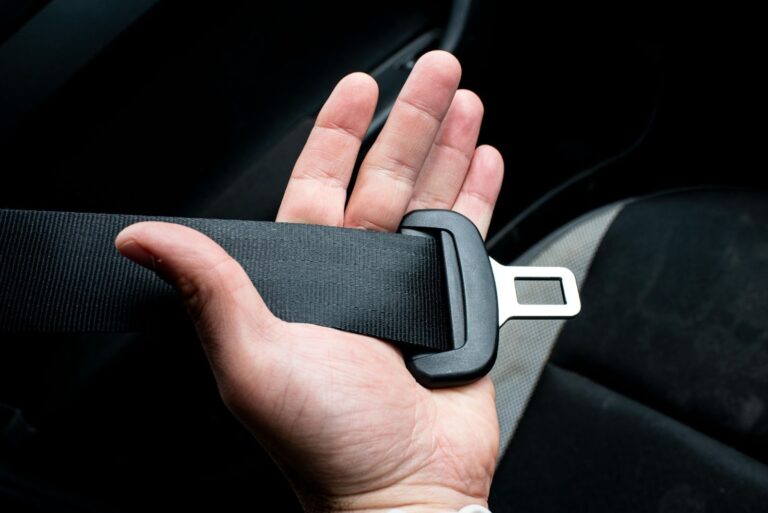
Belts are measured from the end of the metal tongue to the point where the webbing meets the buckle housing. This measurement represents the maximum usable length when fully extended.

A few factors can affect the actual length you experience:

  • Belts can shorten slightly over time due to repairs, knots, or re-stitching after damage
  • Cabin refurbishments may install different belt systems than older configurations
  • Online figures are always approximate—treat them as guidelines rather than guarantees

When researching, remember that the same airline might have different belt lengths across their fleet depending on whether you’re boarding an Airbus A320, a Boeing 737, or a wide-body aircraft like the 787.
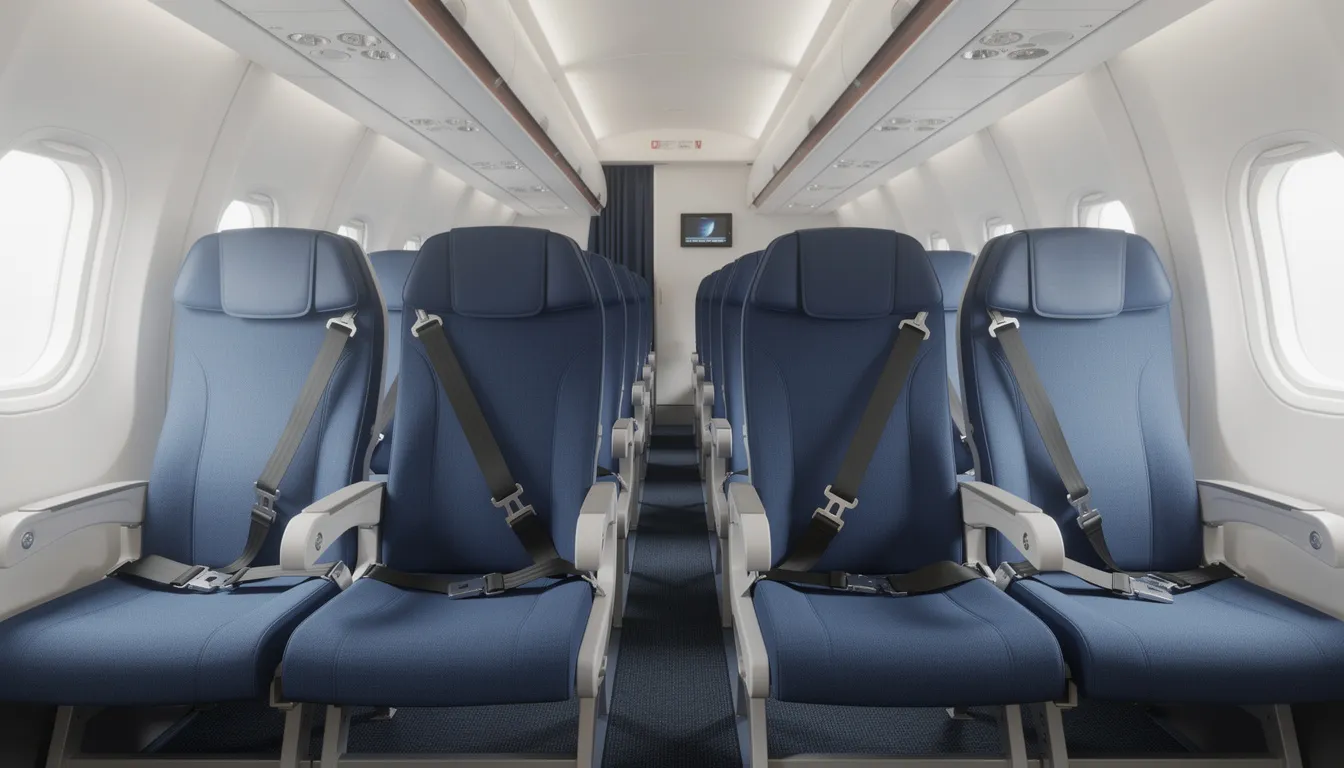
The image depicts the interior of an airplane cabin featuring several empty passenger seats, each equipped with visible seat belts. The layout includes aisle seats and middle seats, providing a clear view of the seat belt lengths and dimensions, which may vary among different airlines.

Seat Belt Extenders: How They Work and When You Need One

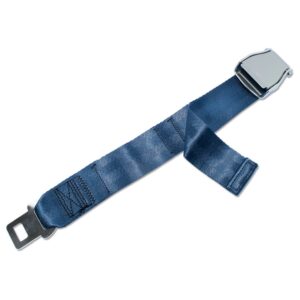
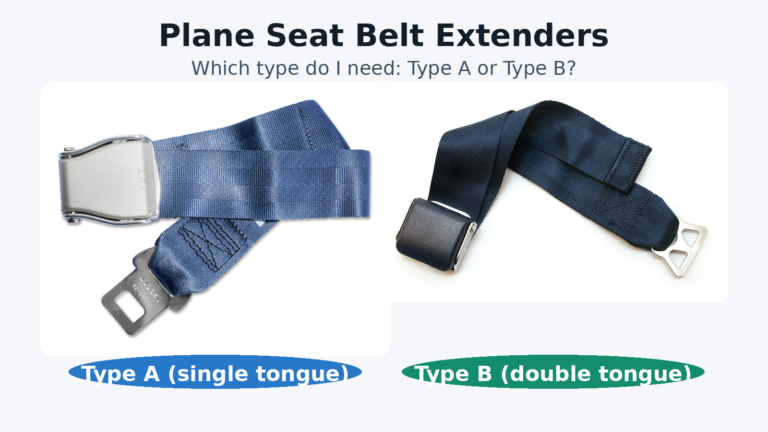
A seat belt extender is an additional length of certified webbing with compatible fittings that clips into your existing aircraft seat belt. It effectively makes your belt longer without modifying the original safety system.

What extenders provide:

  • Approximately 20–25 inches (50–65 cm) of extra length
  • The same safety certification as the original belt when provided by the airline
  • A simple clip-in attachment that takes seconds to use

How to get one:

Most airlines offer extenders free of charge. Simply press your call button after boarding and quietly tell the flight attendant you need an extension belt. Crew members handle these requests regularly—it’s not a big deal to them, and it shouldn’t feel awkward for you.

Important restrictions:

  • Extenders are not permitted in exit row seats (you’ll be relocated if you need one)
  • The FAA and many international regulators prohibit passengers from bringing their own seat belt extender
  • Personal or third-party extenders haven’t been tested with that specific aircraft’s system and may fail in an emergency

When you’ll likely need an extender:

  • Your waist or seated abdomen measures over approximately 50 inches (127 cm)
  • You’re wearing bulky clothing like heavy winter coats or multiple layers
  • Pregnancy or medical devices add circumference around your midsection

Needing extenders is far more common than most people realize. Flight attendants see these requests on nearly every flight. The crew’s job is to keep you safe and comfortable—asking for an extender helps them do exactly that.

Airplane Seat Belt Length by Region and Airline Type

Exact belt measurements change as airlines retrofit cabins and take delivery of new aircraft. Rather than memorizing specific numbers that may become outdated, understanding general patterns helps you set realistic expectations.

North American Full-Service Carriers

Several North American airlines (Delta, American, United, Air Canada) typically provide economy seat belts in the 45–55 inch (114–140 cm) range. Extenders are widely available across these carriers, and customer service teams are generally responsive to pre-flight inquiries about belt length.

European Low-Cost Carriers

Airlines like Ryanair, easyJet, and Wizz Air often operate with belts toward the lower end of the 46–56 inch range. Their high-density seating configurations and older narrow-body fleets can mean tighter fits overall. If you’re borderline on belt length, budget carriers warrant extra caution.

Major Flag Carriers (European and Asian)

Carriers like Lufthansa, Emirates, Singapore Airlines, and British Airways generally offer belts comparable to North American standards on their mainline fleets. Long-haul wide-body aircraft (Boeing 777, 787, Airbus A350) often feature belts closer to the upper end of the range because the seats themselves are slightly wider.

The key takeaway:

Always verify with your specific airline and, if possible, identify the aircraft model for your route. A cabin refurbishment last year may have changed belt lengths from what travelers reported online three years ago.

How to Find Out Your Airline’s Seat Belt Length

Airlines rarely publish seat belt measurements on their websites. Getting accurate information requires some detective work, but it’s worth the effort if you’re concerned about fit.

Step-by-step approach:

  1. Check the airline’s accessibility pages: Look for sections titled “special assistance,” “customers of size,” or “passengers with disabilities.” Some airlines provide hints about belt lengths or extender availability here.
  2. Contact customer service directly: Call, email, or use live chat. Ask specifically: “What is the seat belt length in economy on [aircraft type] for my route?” Being specific about the aircraft helps you get accurate answers.
  3. Identify your aircraft model first: Use tools like SeatGuru or the airline’s own seat maps to find out whether you’ll be on an Airbus A320, Boeing 737-800, or another type. This makes your customer service inquiry much more productive.
  4. Check traveler forums: Resources like FlyerTalk, Reddit’s travel communities, and plus-size travel blogs often share real-world measurements. Treat these as approximate—helpful for general guidance but not guaranteed to match your exact flight.
  5. Measure yourself at home: Using a soft tape measure, measure your seated waist/abdomen circumference while wearing your typical travel clothes. Compare this to the 46–56 inch guideline to gauge whether you’re likely to need an extender.

If your measurement falls close to 50 inches, plan on requesting an extender. It’s far better to have one and not need it than to discover mid-flight that you’re just slightly short.

Clothing Size, Body Shape, and Whether the Seat Belt Will Fit

Your clothing size offers only a rough indication of whether an airplane seat belt will fit. A person wearing US size 20 at 5’2” will have very different measurements than someone wearing the same size at 5’10”. Body shape matters far more than the number on your label.

General patterns from real travelers:

  • At roughly UK 22–24 / US 18–20, many passengers report fitting most economy belts but occasionally needing an extender on low-cost carriers or older aircraft
  • Above approximately UK 24–26 / US 20–22, needing an extender becomes more common, especially on narrow-body planes
  • Some passengers at UK 28+ / US 24+ find they need extenders on virtually every flight

How body shape affects fit:

  • Apple shape (more weight carried at the abdomen): More likely to need an extender because the belt crosses the widest part of your body
  • Pear shape (more weight at hips and thighs): May fit the belt more easily, but seat width and armrests become the primary comfort concern

Practical measuring advice:

Take your seated waist measurement while wearing what you’d typically fly in. Sit in a firm chair (not a soft couch), relax your abdomen naturally, and wrap the tape measure around your widest point. Remember that sitting spreads your abdomen more than standing does.

Height and torso length also play a role. Shorter passengers with a higher belly position sometimes find the belt feels shorter because of where it crosses their body, even if their circumference is technically within range.
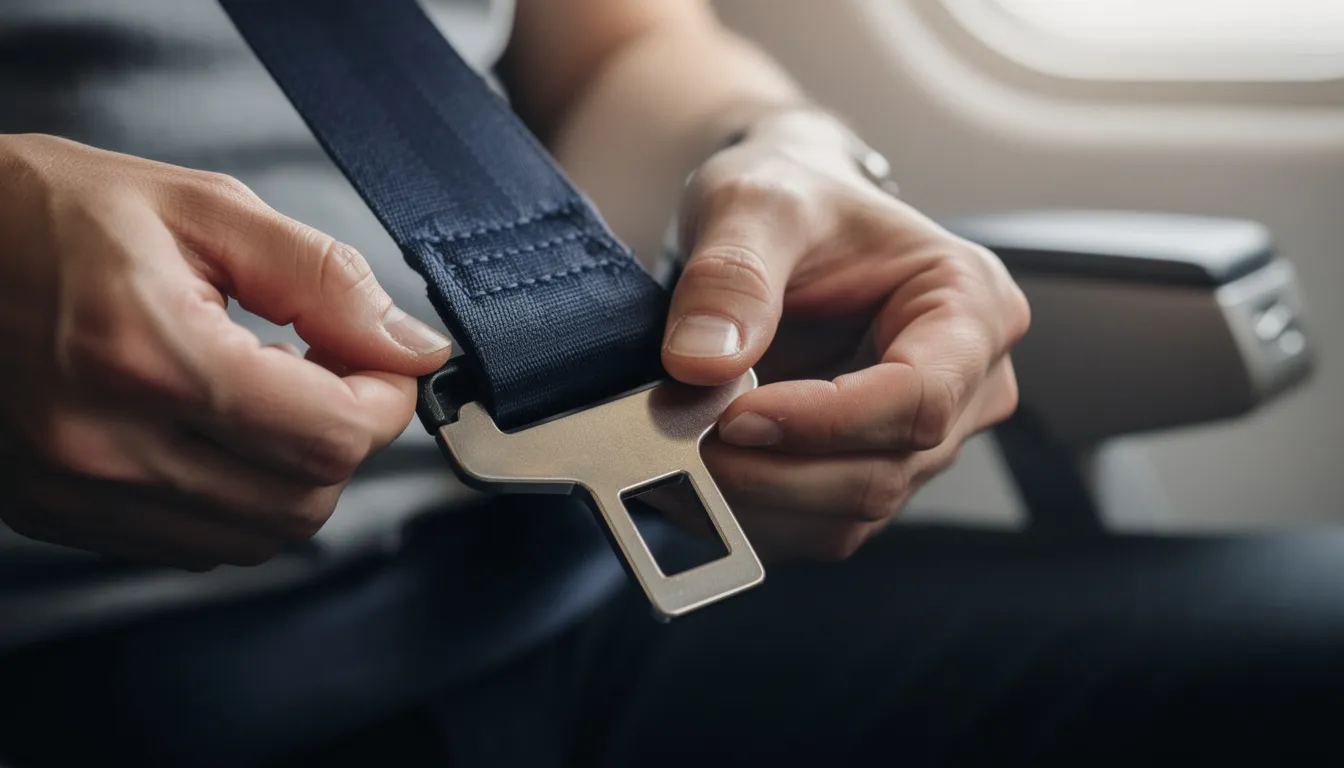
A close-up image shows hands fastening a seat belt buckle, highlighting the importance of safety during a flight. The scene captures the detail of the belt as it adjusts to fit comfortably, emphasizing the need for proper seat belt length for passengers of various body shapes.

Choosing the Best Seat If You’re Worried About Belt Length

Smart seat selection can make a meaningful difference in your comfort, though it won’t change the actual belt length. Understanding the trade-offs helps you make informed choices during booking or check-in.

Seat position considerations:

Seat TypeProsCons
Aisle seatOne side can extend slightly into aisle; easier to get upArmrest must stay down during taxi/takeoff; cart bumps
Window seatMore privacy; wall to lean againstWall can limit hip room on some aircraft; harder to exit
Middle seatSometimes cheaperLeast comfortable; armrest competition on both sides

Seats to approach with caution:

  • Exit row seats: Cannot use a seat belt extender under any circumstances. Despite extra legroom, if you need an extender, you’ll be moved to another row. The width is often the same or narrower than standard seats.
  • Bulkhead seats: The fixed armrests contain tray tables, reducing the usable seat width. Both the seat and belt may feel tighter despite the extra space in front.
  • Extra legroom seats: More seat pitch (distance between rows) doesn’t change seat width or belt length. If your primary concern is belt fit rather than long legs, these seats don’t solve your problem—and they often cost extra.

What to look for:

  • Standard economy seats away from bulkheads and exit rows
  • Aisle seats if you want the option to shift slightly or move easily
  • Aircraft known for wider economy seats (check seat width specifications on SeatGuru)

Avoid booking an exit row if there’s any chance you might need an extender. The disappointment of being relocated mid-boarding adds unnecessary stress.

What Happens If the Seat Belt Doesn’t Fit on the Plane

Cabin crew handle belt-fit situations on nearly every flight. They have clear procedures, and the goal is always to find a solution that keeps you safe and on your way.

Typical process:

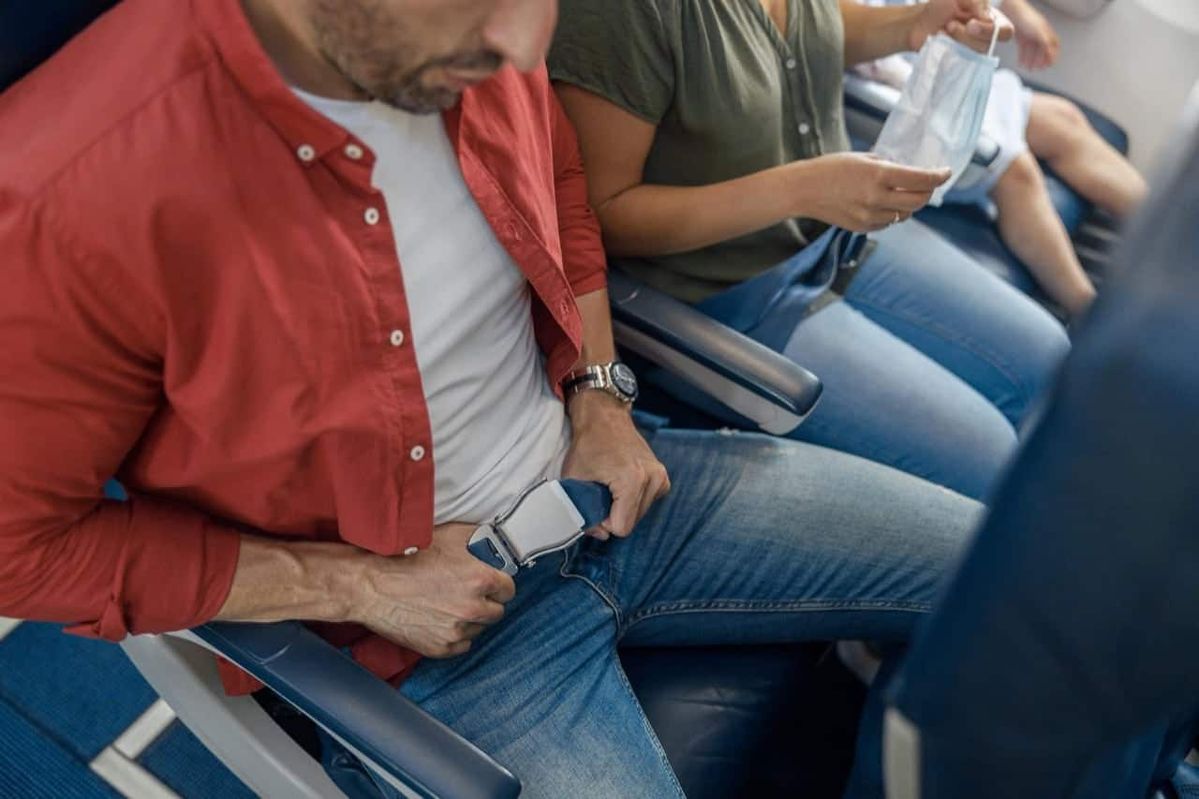
  1. Press your call button and quietly tell the flight attendant you need a seatbelt extender
  2. The crew member will bring an airline-approved extender and show you how to attach it
  3. If you’re seated in an exit row, you’ll be moved to another seat where extenders are permitted

What happens if an extender still isn’t enough:

  • The flight crew will first look for a roomier seat if one is available (sometimes in premium economy or business class, though this isn’t guaranteed)
  • If no solution works on that specific aircraft, the airline may require you to take a later flight and purchase a second seat
  • In rare cases, denied boarding can occur if there’s no safe way to accommodate you—but airlines genuinely try to avoid this

Protect yourself with preparation:

  • Review the airline’s Contract of Carriage or conditions of carriage before booking
  • Search for their “customer of size” or “passenger of size” policy
  • If you’re borderline, consider proactively contacting the airline to discuss options

If your belt barely closed on your last flight, don’t wait until it becomes urgent. Request an extender proactively next time. It’s far less stressful to already have it ready than to discover you need one after you’ve forced the buckle closed.
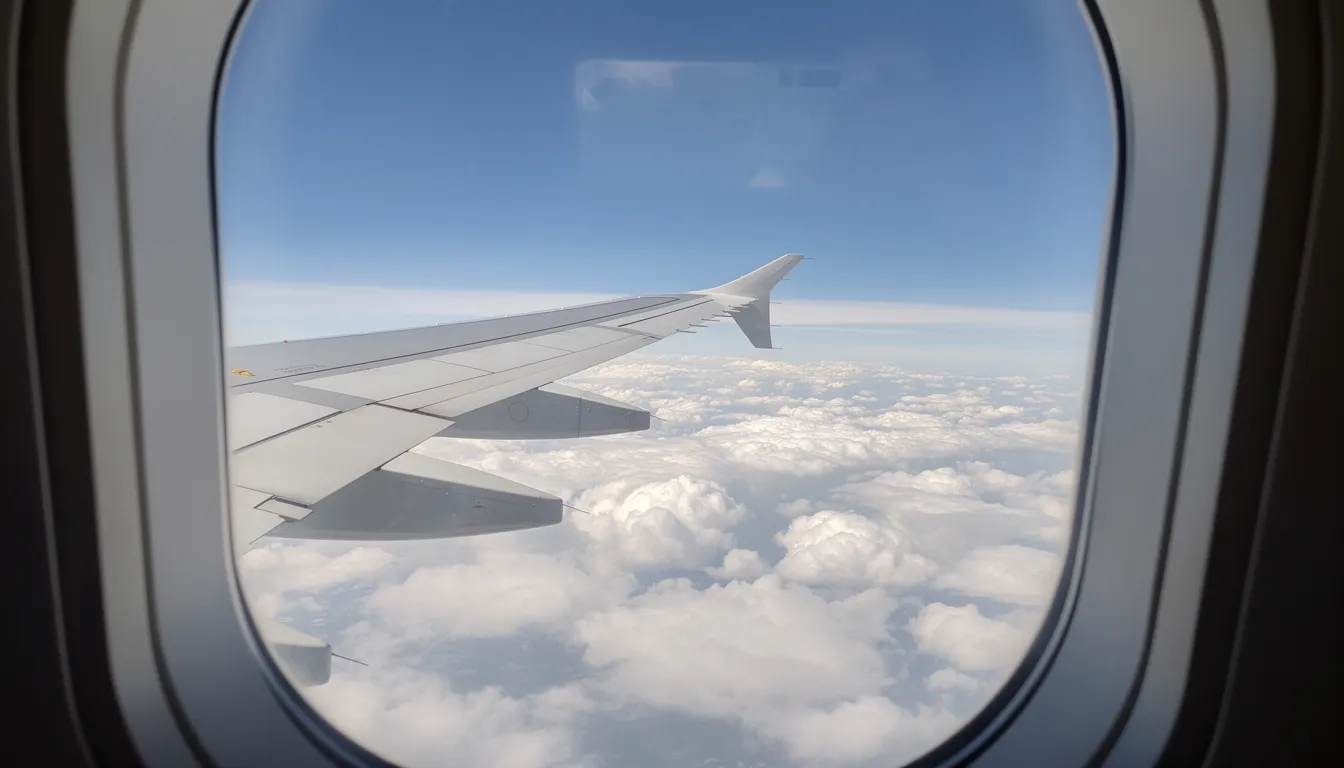
The image shows a view from an airplane window seat, highlighting the aircraft's wing against a backdrop of fluffy clouds. This perspective captures the sensation of flying, with the seatbelt securely fastened for safety during the flight.

Tips to Make Flying More Comfortable When Belt Length Is a Concern

A little preparation goes a long way toward reducing stress. These practical steps help you fly with more confidence and comfort.

Before you fly:

  • Measure your seated waist at home using the method described earlier
  • Contact the airline 48–72 hours in advance if you have questions about belt length or extender availability
  • Check your aircraft type using the airline’s app or SeatGuru, then research typical seat dimensions

What to wear:

  • Choose soft, stretchy waistbands instead of thick belts or rigid jeans
  • Remove bulky jackets, hoodies, or heavy sweaters before buckling—stow them overhead
  • Avoid clothing with large metal buckles that might interfere with the seat belt

Booking strategies:

  • Book early if you might need two adjacent seats—options disappear as flights fill
  • Choose newer aircraft types when possible (Airbus A321neo often has slightly more room than older 737-800 configurations)
  • Skip the exit row if there’s any chance you’ll need an extender

On the plane:

  • Sit back fully in the seat and pull slack gently rather than yanking the belt
  • Adjust the belt position low across your hips, not across your abdomen
  • If you’re borderline, ask for an extender immediately after boarding rather than hoping you won’t need it

Airport logistics:

  • Use airport restrooms before boarding—aircraft lavatories are very narrow
  • Carry any medications or comfort items in your personal bag for easy access
  • Arrive at the gate with time to spare so you’re not rushed during boarding

These adjustments don’t change the fundamental belt length, but they can make the difference between a stressful experience and a manageable one.

Key Takeaways on Airplane Seat Belt Length

  • Most economy seat belts measure 46–56 inches (117–142 cm); if your seated waist exceeds approximately 50 inches, you’ll likely need an extender
  • Belt length varies by airline, aircraft type, and even individual seat rows—there’s no universal standard
  • Seat belt extenders are free, common, and must be airline-approved; they’re not permitted in exit row seats, and you cannot bring your own seat belt extender
  • Contact your airline in advance if you’re unsure about fit, and measure your seated waist at home for comparison
  • Smart seat selection and clothing choices significantly improve comfort and reduce boarding stress
  • Body shape matters more than clothing size—apple shapes typically need more belt length than pear shapes at similar weights

Take a few minutes to prepare before your next flight. Measure yourself, check your aircraft type, and contact the airline if you have questions. With the right information, you can board knowing exactly what to expect—and focus on where you’re going instead of worrying about the seat belt.