FREE Postage via Royal Mail | 10% OFF On Orders Over £20

Dog Seat Belt: Keep Your Dog Safe and Legal on UK Roads

dog car seat extender
Table of Contents

Every year, thousands of UK drivers hit the road with their dogs completely unrestrained. Some assume their well-behaved pet will simply sit still. Others don’t realise there’s a legal requirement at all. The reality is that travelling with an unsecured dog puts everyone in the vehicle at risk—and could land you with a fine.

This guide breaks down everything you need to know about using a dog seat belt correctly, from understanding the law to choosing the right product for your vehicle and your furry friend.

Do Dogs Need a Seat Belt in the UK?

Yes. Under UK Highway Code Rule 57, dogs must be suitably restrained while travelling in a vehicle. A dog seat belt combined with a properly fitted harness is the simplest and most practical way for most owners to comply with this requirement.

Here’s what you need to know upfront:

  • The law is clear: UK Highway Code Rule 57 states that animals must be “suitably restrained so they cannot distract you while you are driving or injure you, or themselves, if you stop quickly.”
  • The physics are brutal: An unrestrained 30 kg dog travelling at just 30 mph becomes a projectile exerting over 1,000 pounds of force in a crash. That’s enough to cause serious injury or death to passengers.
  • Fines apply: Police can issue fixed penalty notices—typically £100 on the spot—for “driving without proper control” if a loose pet causes driver distraction. In court, fines can reach £1,000.
  • Insurance implications: If you’re involved in an accident with an unrestrained dog, your insurer may reduce or refuse your claim entirely.
  • The safest setup: Use a crash-tested harness attached to a dog seat belt or tether. Never attach a car restraint directly to a collar, as this risks serious neck injury during sudden braking.

Bottom line: A dog seat belt isn’t optional—it’s a safety essential and a legal expectation for every car journey.

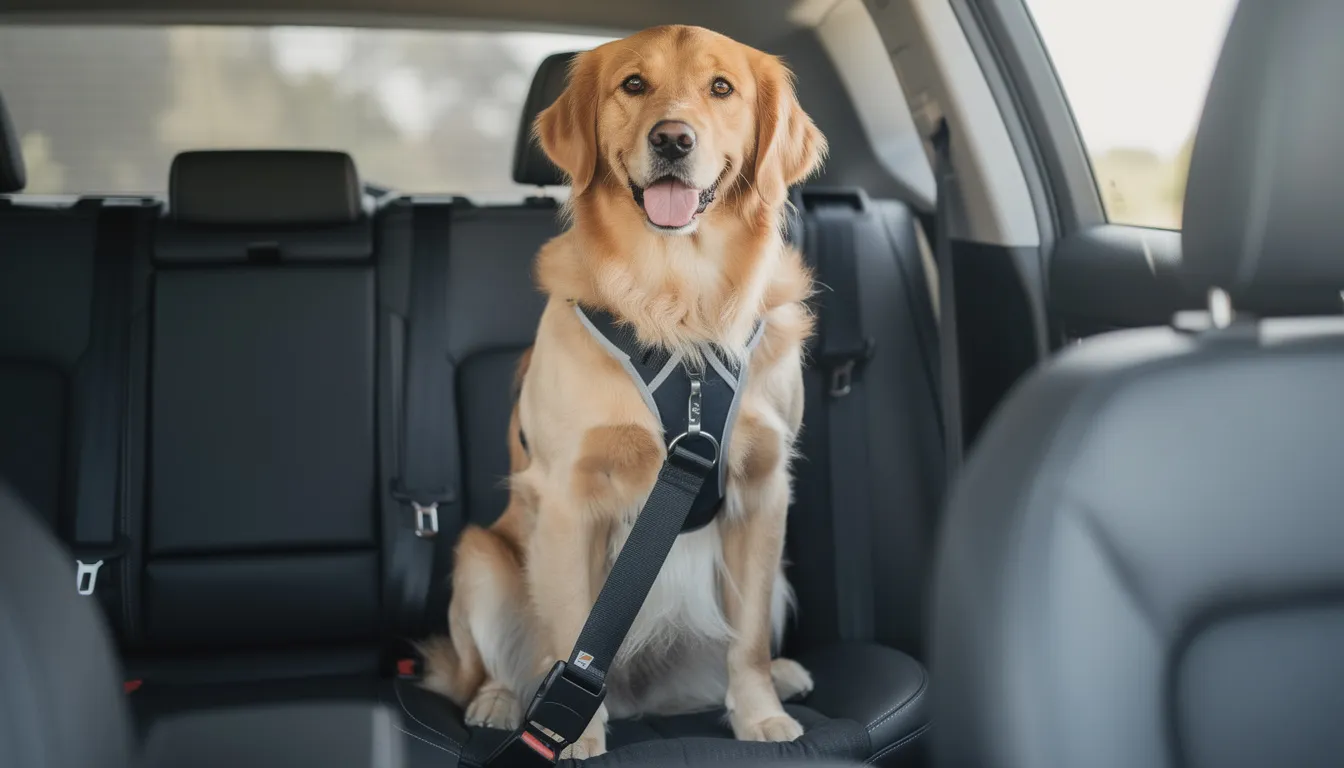
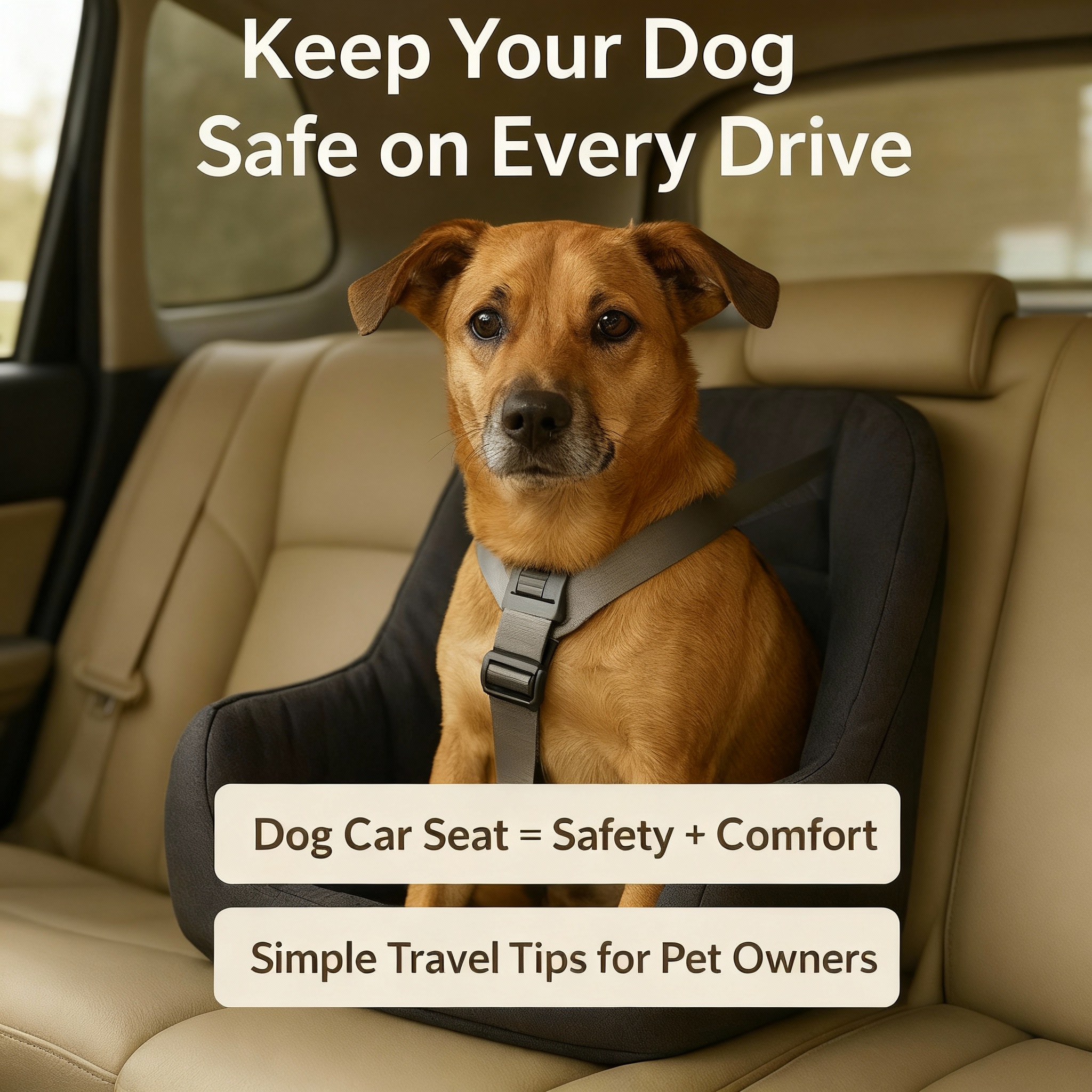
A golden retriever is comfortably secured in the back seat of a car, wearing a dog harness that is attached to a seat belt for safety during the car journey. This setup ensures the furry friend is secure and reduces the risk of driver distraction.

What Is a Dog Seat Belt and How Does It Work?

A dog seat belt is a short tether designed specifically for securing dogs inside vehicles. It connects your car’s existing restraint system to a harness worn by your dog, keeping them in place while allowing limited movement.

Most dog seat belts consist of automotive-grade nylon webbing or steel cable, metal clips, and a swivel carabiner that attaches to the D-ring on your dog’s harness. Some models include elastic bungee sections to absorb shock during sudden stops.

Here’s how the system works in practice:

  • Step 1: Choose a secure attachment point—this could be the seat belt buckle, an ISOFIX anchor, or a loop around the headrest.
  • Step 2: Clip the seat belt attachment into your chosen anchor point.
  • Step 3: Fit your dog with a well-fitted harness (not a collar).
  • Step 4: Attach the carabiner end of the tether to the harness D-ring.
  • Step 5: Adjust the length so your dog can sit or lie down comfortably but cannot roam the cabin or reach the front seats.

Important distinctions:

Product TypeWhat It IsBest For
Dog seat beltShort tether connecting to harnessMost dogs, quick setup
Dog car harnessFull harness with built-in seat belt loopCrash-tested protection
Dog booster seatElevated seat with internal tetherSmall dogs needing a view

The key difference is that a standalone dog seat belt requires a separate harness, while a full dog car harness often includes integrated restraint features designed to work as a complete system.

Types of Dog Seat Belts You’ll See in the UK

Walk into Pets at Home or browse Amazon.co.uk and you’ll find dozens of dog seat belt options. They all claim to keep your pet safe, but they work in different ways. Understanding the main types helps you pick the right product for your car and your dog.
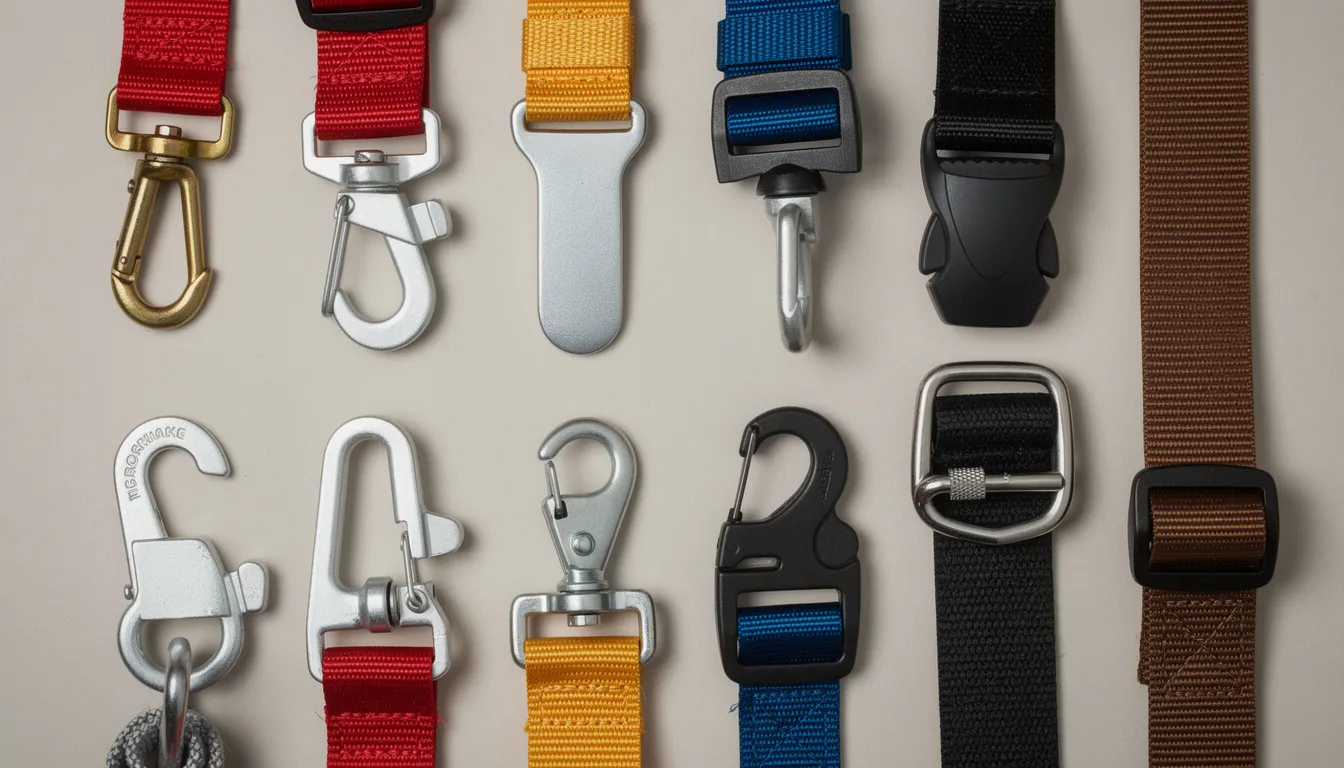
  • Standard seat buckle clip: The most common type. Products like the Amazon Basics Dog Seat Belt or generic “Dog Seat Belts for Cars UK” 2-packs simply click into your vehicle’s standard seat belt socket. Best for: Quick installation, most vehicles, budget-conscious owners.
  • Headrest-loop style: These strap around your car’s adjustable headrest. Examples include “Dog Car Headrest Seat Belt 2 Pack” and “Go Buyer Extra Long Dog Seat Belt for Car.” Best for: Cars without ISOFIX, owners who want the seat belt buckle free for passengers.
  • 2-in-1 and 3-in-1 designs: Models like AUBELL 3-in-1 and Pawaboo 3-in-1 offer multiple attachment options—ISOFIX bars, LATCH anchors, or standard seat buckles. Best for: Owners with multiple vehicles or those wanting flexibility.
  • Double dog seat belts: Products like SlowTon Double Dog Seat Belt let you secure two dogs from a single headrest or anchor point. Best for: Multi-dog households, keeping dogs separated but restrained.
  • Chew-proof cable styles: Steel rope cable belts (often marketed as “Chew Proof Steel Rope Cable Dog Car Harnesses”) use stainless steel cores. Best for: Power chewers, large breeds, dogs with a history of destroying fabric restraints.
  • Brand-specific connectors: Specialist harness brands like Julius-K9 and Ancol offer their own seat belt connectors designed to work with their harnesses. Best for: Owners already using these harness systems.
A close-up image displays various dog seat belt clips and attachment mechanisms neatly arranged on a surface, highlighting the different designs that ensure the safety and comfort of your furry friend during car journeys. These clips are essential for keeping your pet secure and minimizing driver distraction while traveling in a vehicle.

Safest Dog Restraint: Seat Belt vs. Harness vs. Crate

For most UK drivers, the safest restraint option is a crash-tested harness used with a compatible seat belt or tether—particularly for dogs weighing up to around 32 kg. But the right choice depends on your dog’s size, temperament, and how you travel.

Crash-Tested Harnesses

These represent the gold standard in canine car safety. Products like the CarSafe Crash-Tested Dog Harness and certain IOKHEIRA models feature:

  • Continuous loop seat belt webbing that spreads crash forces across the chest
  • Hi-vis reflective strips for roadside visibility
  • Independent testing to standards similar to child restraints

The Sleepypod Clickit Sport, while more common in the US market, has been tested at 50 mph in frontal impacts. In the UK, CarSafe harnesses have been tested by OVSC-registered laboratories for dogs up to 32 kg.

Why Harness, Not Collar

Never attach a car restraint to a collar. In sudden braking or a collision, the force concentrates on the neck, risking:

  • Cervical spine injuries
  • Tracheal damage
  • Strangulation

A harness distributes force across the chest, shoulders, and torso—the same principle behind human three-point seat belts.

Travel Crates

Crates offer excellent protection when properly secured:

  • Should be strapped to the rear seat or placed in the boot against the back of the seats
  • Must be sized so the dog can stand, turn, and lie down
  • Puppies under 6 months are often safer in a secured crate than a harness

The downside: crates take up significant space and aren’t practical for all vehicles.

Booster Seats for Small Dogs

Small dog booster seats with memory foam and dual safety belts elevate tiny dogs for comfort and visibility. Always ensure:

  • The booster is strapped to the vehicle seat
  • An internal tether attaches to the dog’s harness (not collar)
  • The dog cannot jump or fall out

The Reality Check

No restraint eliminates all risk. But using crash-tested gear dramatically reduces the chance of serious injury and—critically—stops dogs from causing driver distraction during travel.

How to Choose the Right Dog Seat Belt (Step-by-Step)

Amazon.co.uk lists dog seat belts ranging from £3.59 for basic models to £14.91 for premium options like Mighty Paw. With so many similar-looking products, focus on safety features and proper fit rather than simply grabbing the cheapest option.

Step 1: Measure Your Dog

Use a soft tape measure to record:

  • Chest girth: Measure around the widest part of the ribcage
  • Weight: Weigh your dog or check recent vet records
Weight RangeTypical Chest GirthNotes
Under 10 kg35-50 cmSmall breeds, consider booster seats
10-25 kg50-70 cmMost harnesses and belts fit well
25-32 kg70-85 cmEnsure crash-tested for this weight
Over 32 kg85+ cmConsider crate or heavy-duty options

Step 2: Check Your Car’s Anchor Points

  • Older cars without ISOFIX: Use headrest-loop or standard buckle attachments
  • Newer cars with ISOFIX/LATCH: Multi-attachment models like IOKHEIRA offer more secure anchor points
  • Multiple vehicles: Consider 2-in-1 or 3-in-1 belts for flexibility

Step 3: Look for Key Features

  • Adjustable length: 50-70 cm range suits most dogs
  • Heavy-duty metal hardware: Avoid all-plastic clips
  • 360° swivel carabiners: Prevent tangling
  • Reflective stitching: Improves visibility in emergencies
  • Anti-shock bungee section: Absorbs sudden jolts

Step 4: Match Budget to Needs

Price PointWhat You GetExample Products
£5-£7Basic nylon, plastic/metal clipsAmazon Basics, generic 2-packs
£10-£12Bungee sections, swivel clips, headrest optionsAUBELL, Pawaboo
£14-£15Human seatbelt-grade materials, steel hardwareMighty Paw, steel cable models

Step 5: Verify Crash-Test Claims

Be sceptical of vague “safety tested” marketing. Look for:

  • Specific weight limits (e.g., “tested to 32 kg”)
  • Named testing facilities (e.g., OVSC-registered labs)
  • Reference to recognised standards

CarSafe harnesses, for example, have genuine documented crash testing. Many budget options do not.

Fitting and Using a Dog Seat Belt Safely

Even the best dog seat belt is unsafe if fitted incorrectly. The good news: proper setup takes under two minutes once you know the process.
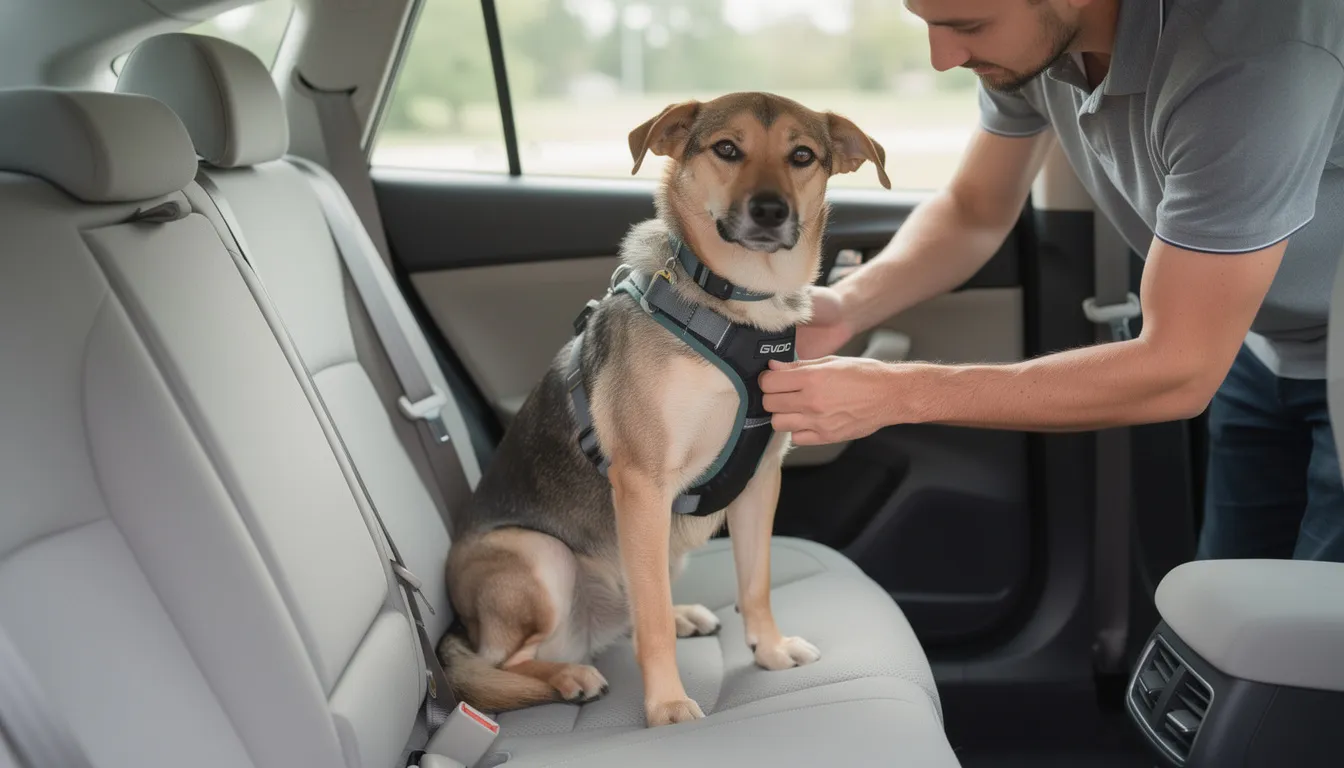
A person is adjusting a dog harness on a medium-sized dog seated comfortably in the back seat of a car, ensuring the furry friend is secure for the car journey. The image highlights the importance of using dog harnesses and seat belts for pet safety while traveling.

The Correct Fitting Sequence

  • Choose the back seat: Never restrain a dog on the front seat. Airbags can cause fatal injuries to pets in a crash.
  • Fit the harness properly: Use the two-finger rule—you should be able to slide two fingers under any strap, but no more.
  • Attach the belt to your anchor point: Click into the buckle, loop around the headrest, or clip to ISOFIX bars.
  • Connect to the harness D-ring: Use the back D-ring, not a front attachment point.
  • Adjust the length: Your dog should be able to sit and lie down comfortably but not stand on the seats, climb into the front, or reach the driver.

Monthly Safety Checks

Make it a habit to inspect your equipment:

  • Check webbing for fraying, cuts, or wear
  • Look for rust on metal clips and carabiners
  • Examine for chew damage, especially on fabric sections
  • Replace immediately if you find any damage

Helping Nervous Dogs Adjust

Some dogs take time to accept car restraints:

  • Let your dog wear the harness around the house first
  • Take short drives around the block before longer trips
  • Use treats and praise to build positive associations
  • Keep initial journeys to 10-15 minutes

Keep a Lead Attached

Brands like CarSafe recommend keeping a lead attached to the harness during travel. This allows you to:

  • Safely control your dog when opening doors after a journey
  • Prevent bolting after an emergency stop
  • Maintain control in car parks and at rest stops

UK Law, Insurance and Dog Car Travel Etiquette

Understanding the legal landscape makes proper restraint more than just a personal safety choice—it protects your wallet and your insurance coverage.

The Legal Position

Highway Code Rule 57 states explicitly that dogs must be:

“suitably restrained so they cannot distract you while you are driving or injure you, or themselves, if you stop quickly.”

There is no specific “dog seat belt act” in uk law, but police enforce restraint requirements through existing road traffic legislation:

OffenceTypical PenaltyMaximum
Driving without proper control£100 fixed penalty£1,000 in court
Careless driving (if pet causes accident)£100 fixed penalty£5,000 + points

Insurance Implications

  • Insurers may reduce or deny claims if an unrestrained dog contributed to an accident
  • Some policies specifically require pet restraint
  • Check your policy wording—don’t assume you’re covered

Travel Etiquette Tips

  • Exit on the pavement side: Always let dogs out away from traffic
  • Never leave dogs in hot cars: Temperatures can become fatal within minutes
  • Time meals carefully: Avoid feeding within 2 hours of a long car journey to prevent car sickness
  • Take regular breaks: Stop every 1.5-2 hours for water, toilet breaks, and leg stretches
  • Use reflective gear: Hi-vis harnesses and bungee belts improve safety during night travel and roadside emergencies

Popular Dog Seat Belt Products and What They Offer

The UK market offers hundreds of dog seat belt listings, but certain product types and brands appear consistently across Amazon.co.uk and high street pet shops. Here’s how the main categories break down:

Budget-Friendly Basic Belts (£5-£7)

  • Amazon Basics Dog Seat Belt and generic “Dog Seat Belts for Cars UK” 2-packs
  • Simple nylon straps with metal clips
  • Suitable for light to moderate use
  • Limited shock absorption
  • Best for: Calm dogs, short trips, owners wanting a backup belt

Mid-Range Elastic Bungee Designs (£8-£12)

  • “Dog Seat Belt Adjustable Elastic Bungee” and “Dog Car Headrest Seat Belt 2 Pack”
  • Anti-shock bungee sections absorb sudden braking forces
  • 360° swivel carabiners reduce tangling
  • Often include reflective stitching
  • Best for: Regular travellers, dogs that move around

Multi-Function 2-in-1 and 3-in-1 Belts (£10-£14)

  • AUBELL 3-in-1, Pawaboo 3-in-1, IOKHEIRA ISOFIX & LATCH models
  • Attach to seat belt buckles, ISOFIX bars, or headrests
  • Maximum flexibility across different vehicles
  • Generally higher build quality
  • Best for: Families with multiple cars, those wanting investment pieces

Heavy-Duty and Chew-Proof Options (£12-£15)

  • Steel rope cable belts, Mighty Paw (using human seatbelt material)
  • Stainless steel cores resist chewing
  • Rated for larger breeds and strong pullers
  • Higher weight capacity
  • Best for: Large breeds, dogs that destroy fabric, power chewers

Crash-Tested Specialist Systems (£25+)

  • CarSafe Crash Tested Harness, Julius-K9 connectors, ITSY Pets compliant systems
  • Independently tested to recognised standards
  • Full harness and tether integration
  • Documented weight limits and testing protocols
  • Best for: Safety-focused owners, those prioritising proven protection over price

Choosing Between Single, Double, and Multi-Pack Dog Seat Belts

Amazon.co.uk lists numerous 2-pack and 3-pack options that offer better per-unit value. Here’s when each makes sense:

  • Single belt: One dog, one main car, no need for spares
  • 2-pack: Two dogs, or keep one permanently in a second vehicle
  • 3-pack: Multi-dog households, extended family cars, keeping spares in stock
  • Double dog splitters: Products like SlowTon allow one headrest anchor to secure two dogs without tangling—ideal for multi-dog households wanting a tidy setup

When buying multi-packs, don’t compromise on build quality to save a pound or two. A failed restraint costs far more than the price difference between budget and mid-range products.

Frequently Asked Questions About Dog Seat Belts

These are the questions UK dog owners ask most often about car restraints. Each answer gives you the practical information you need to make smart decisions.

Are dog seat belts legal in the UK?

Yes, dog seat belts are legal and actively recommended. UK law doesn’t specify which type of restraint you must use—only that your dog must be “suitably restrained.” A properly used dog seat belt with a harness meets this requirement and helps you avoid fines for driving without proper control.

Can I clip a dog seat belt to a collar?

No. Always attach car restraints to a harness, never a collar. In a crash or sudden stop, collar attachment concentrates all force on the neck, risking tracheal damage, spinal injury, or strangulation. A harness distributes force across the chest and shoulders—far safer for your pet.

What size belt do I need for my dog?

Most adjustable dog seat belts offer a 50-70 cm length range, which suits the majority of dogs. The critical measurement is your dog’s chest girth for harness sizing. Check product sizing charts—a 10 kg Cocker Spaniel needs different sizing than a 30 kg Labrador, even if both use the same length tether.

Are crash-tested belts and harnesses worth the extra cost?

Where budget allows, yes. Crash-tested products from brands like CarSafe and Mighty Paw have been verified to withstand collision forces. While basic belts provide containment, crash-tested gear offers genuine protection. Think of it as peace of mind for every journey.

Can my dog lie down while wearing a seat belt?

Yes, when properly adjusted. The tether should allow your dog to sit, stand briefly, and lie down in a comfortable position. What it should prevent is standing on seats, climbing into the front, or reaching the driver. If your dog seems unable to settle, the belt may be too short.

Do I need a special harness for car travel?

You can use a regular walking harness with a separate dog seat belt, but car-specific harnesses offer advantages. They’re designed with reinforced D-rings, crash-tested attachment points, and padding positioned to absorb impact forces. For frequent travel, a dedicated car harness is worth considering.

How do I stop my dog chewing through the seat belt?

For persistent chewers, choose steel cable-core belts rather than fabric-only options. Products marketed as “chew-proof” use stainless steel rope inside the outer covering. Additionally, ensuring your dog is comfortable and has had adequate exercise before travel reduces anxiety-driven chewing.

Key Takeaways

  • UK law requires restraint: Highway Code Rule 57 means dogs must be secured, with £100+ fines for non-compliance
  • Harness, never collar: Attach all car restraints to a properly fitted harness to avoid neck injuries
  • Crash-tested matters: Where budget allows, choose products with verified testing from brands like CarSafe
  • Fit correctly: Use the back seat, adjust length so dogs can sit but not roam, and check equipment monthly
  • Match product to dog: Consider your dog’s size, chewing habits, and travel frequency when selecting a belt type

Make Your Next Journey Safe

Keeping your dog secure on the road isn’t complicated once you understand the basics. Measure your dog, check your car’s anchor points, invest in a quality harness and dog seat belt combination, and use it consistently.

The right setup protects your pet, keeps you legal, and eliminates the driver distraction that loose dogs create. Whether you’re popping to the vet or heading on a family holiday, a properly restrained dog means everyone travels with peace of mind.

Ready to get started? Sign up to our email list to receive special offers and discounts on your first order. Browse our page to explore the full range of dog car safety products we keep in stock—designed with your pet’s comfort and safety in mind.